
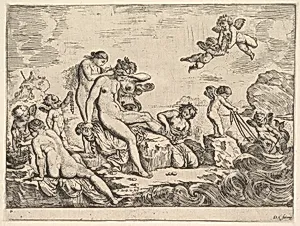
Toilet of Thetis
1610–42
Medium
Etching
Dimensions
Sheet: 6 9/16 x 8 11/16 in. (16.6 x 22.1cm)
Classification
Prints
Department
Drawings and Prints
Museum
Metropolitan Museum of Art, New York, NY
Credit
Harris Brisbane Dick Fund, 1928
Accession Number
28.28.3
Rights
Public Domain
Tags
Art Historical Context
Pierre Brebiette's *Toilet of Thetis* (c. 1610–42) captures a graceful mythological moment from classical lore, depicting the sea nymph Thetis in her intimate grooming ritual, attended by playful putti—those cherubic child figures emblematic of Renaissance and Baroque art. As a French artist active in the early 17th century Brebiette drew inspiration from antiquity, blending elegant nudes with whimsical attendants in a scene that evokes Venusian beauty and divine leisure. The etching's delicate lines highlight the female form's sensuous curves and the putti's lively motion, inviting viewers to ponder themes of vanity, femininity, and the divine feminine. Rendered in etching—a printmaking technique where acid etches intricate lines into a metal plate—this work exemplifies the era's innovation in reproductive art. Etchings like this one, measuring just 6 9/16 x 8 11/16 inches, allowed artists to disseminate elaborate compositions affordably, bridging courtly workshops and broader audiences. Housed in the Metropolitan Museum of Art's Drawings and Prints department (Harris Brisbane Dick Fund, 1928), it reflects the Baroque penchant for dynamic, fleshy nudes amid the cultural revival of Greco-Roman myths during Louis XIII's reign. This intimate print offers a window into 17th-century French taste for mythological erotica, where putti symbolize innocence contrasting nude allure, making it a charming study in lighthearted sensuality for museum-goers today.
About the Artist
Pierre Brebiette · 1598–1642
Pierre Brébiette (c. 1598–c. 1642) was a French painter and etcher whose elegant, sensuous treatment of classical mythology and allegory earned him a significant reputation in early seventeenth-century Paris. Born in Mantes-sur-Seine, Brébiette traveled to Italy as a young man and lived and worked in Rome from around 1617 to approximately 1625, absorbing the influences of ancient sculpture, Renais...