
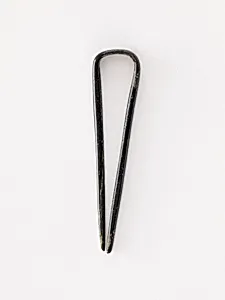
Topknot pin
12th-13th century
Classification
Jewelry and Ornament
Department
Smithsonian Collection
Museum
Smithsonian American Art Museum
Credit
Gift of Charles Lang Freer
Accession Number
F1917.618
Rights
Public Domain
Tags
About this artwork
Reportedly excavated at Gaeseong, Hwanghaebuk-do province, Korea [1]
Art Historical Context
This delicate topknot pin, dating to the 12th-13th century during Korea's Goryeo period (918-1392), exemplifies the refined metalwork of medieval Korean artisans. Crafted from bronze it served a practical yet elegant purpose: securing the traditional topk hairstyle worn by men, a cultural staple that reflected social norms and daily life in ancient Korea. Reportedly excavated in Gaeseong (modern Kaesong) in Hwanghaebuk-do province—once a key political center—this artifact offers a tangible link to Goryeo society, a time of Buddhist influence, celadon ceramics, and sophisticated craftsmanship. As jewelry and ornament, the pin highlights the Goryeo era's mastery of bronze casting and shaping, techniques that produced durable, aesthetically pleasing personal adornments. Though simple in form, such items were status symbols, blending functionality with subtle artistry amid the dynasty's flourishing trade and cultural exchanges with China and beyond. Today, this treasure resides in the Smithsonian American Art Museum, thanks to the generous gift of Charles Lang Freer, pioneering collector of Asian art. It invites visitors to ponder the intimate details of Korean heritage, preserved across centuries.
About the Artist
Unknown
The artist designated as "Unknown" in our virtual museum's collection exemplifies a poignant chapter in art history: creators whose identities have faded into obscurity despite the enduring power of their work. With only one known artwork attributed to them in our holdings, this figure represents countless anonymous hands that shaped visual culture across centuries. Museums worldwide, including th...