
Torc
Unknown Artist
4th–3rd century BCE
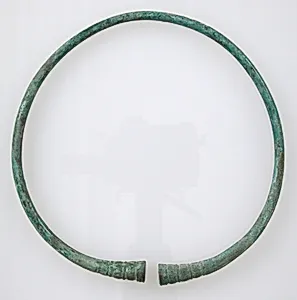
Medium
Copper alloy
Dimensions
Overall: 5 9/16 x 5 9/16 x 7/16 in. (14.2 x 14.1 x 1.1 cm)
Classification
Metalwork-Copper alloy
Culture
Celtic
Department
Medieval Art
Museum
Metropolitan Museum of Art, New York, NY
Credit
Gift of J. Pierpont Morgan, 1917
Accession Number
17.191.204
Rights
Public Domain
Art Historical Context
This exquisite copper alloy torc, dating to the 4th–3rd BCE, hails from Celtic culture during the Iron Age, a when intricate metalwork flourished across Europe. Torcs like this were rigid neck rings, typically worn by high-status individuals—warriors, chieftains, or elites—as symbols of power, wealth, and tribal identity. Crafted from durable copper alloy, its circular form measures a modest 5 9/16 x 5 9/16 x 7/16 inches, suggesting it was designed for everyday wear yet showcased remarkable technical skill in casting and possibly hammering. The torc's smooth, unadorned surface highlights the Celts' mastery of metalworking, a hallmark of their La Tène artistic tradition, even without elaborate decoration. Such pieces were not mere jewelry but cultural artifacts, often buried in hoards or graves, offering glimpses into pre-Roman Celtic society. Its presence in the Metropolitan Museum of Art's Medieval Art Department—thanks to a 1917 gift from J. Pierpont Morgan—bridges ancient craftsmanship with modern appreciation, reminding us of the enduring allure of Celtic ingenuity. (Word count: 178)