
Torc
Unknown Artist
4th–3rd century BCE
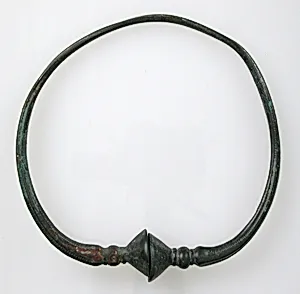
Medium
Copper alloy
Dimensions
Overall: 5 11/16 x 5 11/16 x 1 in. (14.5 x 14.4 x 2.5 cm)
Classification
Metalwork-Bronze
Culture
Celtic
Department
Medieval Art
Museum
Metropolitan Museum of Art, New York, NY
Credit
Gift of J. Pierpont Morgan, 1917
Accession Number
17.191.244
Rights
Public Domain
Art Historical Context
This exquisite torc, crafted by an unknown Celtic artist around the 4th–3rd century BCE, exemplifies masterful metalworking of ancient Celtic culture during the late Iron Age. Torcs were rigid neck rings worn as symbols of high status, power, and wealth, often adorning warriors, chieftains, or elites. Originating from regions across Europe where Celtic tribes flourished, these ornaments were not mere jewelry but potent emblems of identity and prestige, frequently depicted in Roman accounts of Celtic warriors. Fashioned from copper alloy—a material akin to bronze prized for its durability and workability—the torc measures a compact 5 11/16 x 5 11/16 x 1 inches, suggesting it was designed for a wearer of considerable stature. The intricate craftsmanship likely involved hammering, twisting, and possibly soldering techniques, showcasing the Celts' advanced metallurgical skills passed down through generations. Such pieces highlight a vibrant artistic tradition blending functionality with bold aesthetics, free from the monumental stonework of other ancient cultures. A generous gift from J. Pierpont Morgan in 1917, this torc resides in the Metropolitan Museum of Art's Medieval Art Department, bridging ancient Celtic ingenuity with later European heritage. Visitors are invited to marvel at its timeless allure, a tangible link to the fierce, artistic spirit of prehistoric Europe.