
与謝蕪村筆 山野行旅図屏風|Travels through Mountains and Fields
ca. 1765
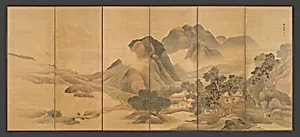
Medium
Pair of six-panel folding screens; ink and color on silk
Dimensions
Image (each): 62 1/2 in. × 11 ft. 9 3/4 in. (158.8 × 360 cm) Overall (each): 63 7/8 in. × 11 ft. 11 1/16 in. (162.2 × 363.4 cm)
Classification
Paintings
Culture & Period
Japan · Edo period (1615–1868)
Department
Asian Art
Museum
Metropolitan Museum of Art, New York, NY
Credit
Mary Griggs Burke Collection, Gift of the Mary and Jackson Burke Foundation, 2015
Accession Number
2015.300.157.1, .2
Rights
Public Domain
Tags
Art Historical Context
Yosa Buson's *Travels through Mountains and* (ca. 1765) is a masterful pair of-panel folding screens, rendered in ink and color on silk, capturing the serene beauty of Japan's mountainous landscapes. Measuring over 11 feet wide each, these grand works depict travelers journeying through misty peaks, winding paths, and lush valleys—a poetic evocation of nature's vastness and human transience. Buson, a leading figure of the Edo period (1615–1868), masterfully blends delicate washes of color with bold ink strokes, evoking the spirit of literati painting influenced by Chinese traditions. As a poet-painter in the haikai revival, Buson infused his art with haiku-like subtlety, where every rock, tree, and distant figure tells a story of quiet contemplation. Folding screens like these were prized furnishings in elite Japanese homes, serving as both room dividers and immersive backdrops for tea ceremonies or gatherings. This piece exemplifies the Edo era's flourishing screen arts, celebrating harmony between man and nature amid a time of peace and cultural refinement. Now in the Metropolitan Museum of Art's Mary Griggs Burke Collection, it invites visitors to wander visually through Buson's imagined realms, where mountains symbolize enduring beauty and the traveler's path mirrors life's fleeting journey.