
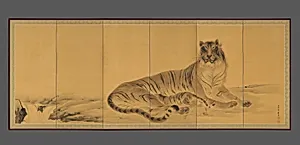
岸竹堂筆 虎図屏風|Tiger, Tigress and Cub
1892
Medium
Pair of six-panel folding screens; ink and color on silk
Dimensions
Overall (each): 68 1/8 in. × 14 ft. 2 3/4 in. (173 × 433.7 cm)
Classification
Paintings
Culture & Period
Japan · Meiji period (1868–1912)
Department
Asian Art
Museum
Metropolitan Museum of Art, New York, NY
Credit
Purchase, Sachiko and Lawrence Goodman Gift, 2018
Accession Number
2018.283.1, .2
Rights
Public Domain
Tags
Art Historical Context
Behold the majestic *Tiger, Tigress and Cub*, a pair of six-panel folding screens painted by Kishi Chikudō in 1892. Rendered in ink and color on silk, these monumental works—each measuring over 14 feet wide—capture a fierce tiger family in dynamic poses, their fur rippling with life against a misty backdrop. Acquired by the Metropolitan Museum of Art through the Sachiko and Lawrence Goodman Gift in 2018, they exemplify the grandeur of Japanese screen painting (byōbu), prized for dividing spaces and adorning elite interiors. Created during the Meiji period (1868–1912), a transformative era when Japan rapidly modernized while preserving artistic traditions, Chikudō's screens reflect the enduring appeal of animal subjects in East Asian art. The artist, known for his vivid depictions of wildlife, masterfully employs sumi ink for bold outlines and subtle gradations, layered with mineral colors to evoke texture and depth on luxurious silk. Folding screens like these were not mere decorations but cultural statements, showcasing technical prowess and harmony with nature. Tigers held symbolic power in Japanese lore as guardians against evil and emblems of strength, making this familial trio especially poignant—a rare tender portrayal amid their ferocity. Visitors, imagine these screens unfolding in a tatami room, transporting you to a wild realm where artistry meets untamed spirit.