
Tray
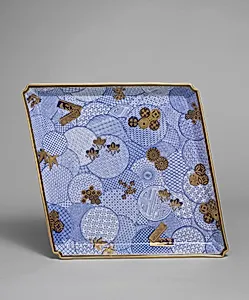
Medium
Bone china
Dimensions
17 × 14 in. (43.2 × 35.6 cm)
Classification
Ceramics-Porcelain
Culture
British, Worcester
Department
European Sculpture and Decorative Arts
Museum
Metropolitan Museum of Art, New York, NY
Credit
Purchase, Robert L. Isaacson Gift, 1989
Accession Number
1989.186.1
Rights
Public Domain
Art Historical Context
This elegant tray, crafted in 1884 by the renowned Worcester factory in Britain, exemplifies the height of Victorian-era porcelain production. Made from bone china—a material prized for its exceptional strength, luminous whiteness, and delicate translucency—this piece highlights the technical mastery of one of England’s most celebrated ceramic manufacturers. Worcester had long been at the forefront of British porcelain innovation, refining bone china techniques that combined kaolin, feldspar, and calcined animal bone to create durable yet refined wares suitable for both everyday refinement and display. As a functional yet decorative object, the tray reflects the cultural importance of fine tableware in 19th-century British society, where such items often served as status symbols in affluent homes. Its classification within the Metropolitan Museum’s European Sculpture and Decorative Arts collection underscores Worcester’s lasting influence on ceramic design during an era when industrial advancements allowed factories to blend artistic tradition with modern production methods. Acquired by the museum in 1989 through the Robert L. Isaacson Gift, this work invites visitors to appreciate the quiet elegance of British porcelain at its peak.
About the Artist
Worcester factory · 1751–2008
The Worcester porcelain factory, established in 1751 in Worcester, England, by physician Dr. John Wall and apothecary William Davis along with 14 partners, marked the birth of one of Britain's most enduring ceramic enterprises. Investing £4,500 at Warmstry House on the River Severn, the founders drew on contacts with the Bristol porcelain manufactory to develop a novel soft-paste porcelain using s...