
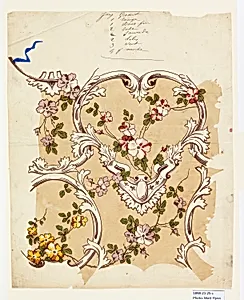
Trial Proof for a Flowered Chintz
1820–30
Classification
textile designs
Department
Smithsonian Collection
Museum
Smithsonian American Art Museum
Credit
Gift of Bridget Mahon
Accession Number
1898-21-25-c
Rights
Public Domain
About this artwork
Research in Progress
Art Historical Context
### Trial Proof for a Floweredintz Step into the vibrant world of early 19th-century American textile with this *Trial Proof for a Flowered Chint*, created around 1820–30. As a trial proof—a preliminary test print used by designers to perfect patterns, colors, and registration—this piece offers a rare glimpse behind the scenes of textile production. Chintz, a glossy printed cotton fabric adorned with floral motifs, was all the rage during this era, gracing American homes in curtains, upholstery, and dresses. Its blooming patterns evoked the natural beauty of gardens, blending European influences with emerging American manufacturing techniques. Dating to the 1820s–1830s, this artifact reflects a booming period for U.S. textile mills, as the nation shifted from importing Indian and British chintz to producing its own. Housed in the Smithsonian American Art Museum's collection through the generous gift of Bridget Mahon, it highlights the artistry in everyday objects. Though research is ongoing, the flowered design underscores chintz's cultural role: a symbol of prosperity and domestic refinement in a young republic. Fun fact: Trial proofs like this were often discarded, making survivors precious windows into the trial-and-error magic that brought color to colonial life. Imagine the excitement of a designer tweaking petals for the perfect print! (198 words)
About the Artist
Unknown
The artist designated as "Unknown" in our virtual museum's collection exemplifies a poignant chapter in art history: creators whose identities have faded into obscurity despite the enduring power of their work. With only one known artwork attributed to them in our holdings, this figure represents countless anonymous hands that shaped visual culture across centuries. Museums worldwide, including th...