
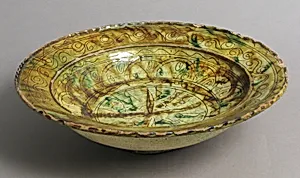
Tricolor Bowl
Unknown Artist
14th century
Medium
Terracotta with yellow-brown and green glaze over slip, decorated in sgraffito
Dimensions
Overall: 3 7/8 x 13 5/8 in. (9.9 x 34.6 cm) diam. of foot: 4 1/8 in. (10.5 cm)
Classification
Ceramics
Culture
Byzantine
Department
Medieval Art
Museum
Metropolitan Museum of Art, New York, NY
Credit
Purchase, V. Everit Macy Gift, 1933
Accession Number
33.141
Rights
Public Domain
Art Historical Context
### Tricolor Bowl Step into the vibrant world of 14th-century Byzantine ceramics with the *Tricolor Bowl*, a stunning example from the Metropolitan Museum of Art's Medieval Art collection. Crafted an unknown artist, this terracotta vessel measures about 3 7/8 inches high and 13 5/8 inches wide, with a sturdy 4 1/8-inch footed base—perfectly sized for both practical use and display. Acquired in 1933 through the V. Everit Gift, it exemplifies the enduring allure of Byzantine craftsmanship during the late Middle Ages, a time when the Eastern Roman blended functionality with artistic flair. The bowl's beauty lies in its sophisticated medium: terracotta coated in slip, then layered with yellow-brown and green glazes, and adorned using the sgraffito technique. Artists scratched intricate designs through the slip layer before firing, revealing the contrasting clay beneath for a delicate, etched effect. This tricolor palette—earthy terracotta, warm yellow-brown, and vivid green—created dynamic patterns that caught the light, showcasing advanced glazing skills honed in Byzantine workshops influenced by Mediterranean traditions. In Byzantine culture, such bowls were everyday treasures, bridging utility and aesthetics in a society rich with Orthodox Christian symbolism and trade. Though the exact motifs are subtle, this piece highlights the era's ceramic innovation, offering visitors a tangible link to a sophisticated medieval world.