
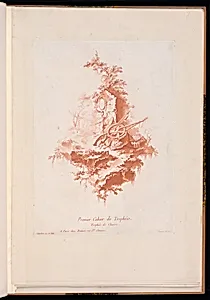
Trophée de Chasse
Classification
Department
Smithsonian Collection
Museum
Smithsonian American Art Museum
Credit
Purchased for the Museum by the Advisory Council
Accession Number
1921-6-483-1
Rights
Public Domain
About this artwork
Research in Progress
Art Historical Context
**Trophée de Chasse** by French artist Henri Sallembier (ca. 1753–1820) is a captivating print created around 1775–76, just before the French Revolution transformed European society. Sallembier, active during the late Rococo and early Neoclassical periods, specialized in intricate designs that reflected the elegance of Louis XVI-era decorative arts. The title, translating to "Hunting Trophy," evokes the aristocratic pastimes of the French nobility, where such motifs adorned furniture, wallpapers, and interiors as symbols of status and leisure. As a print in the Smithsonian American Art Museum's collection—purchased by the Advisory Council—this work highlights the era's printmaking techniques, which allowed designers to widely disseminate ornamental patterns. Though the exact medium remains under study (research in progress), prints like this were essential tools for artisans, bridging fine art and craft. Sallembier's piece likely features a stylized arrangement of hunting implements, blending realism with decorative flourish. Held in the Smithsonian Collection and classified as a print, **Trophée de Chasse** offers a window into 18th-century French culture's fascination with nature and opulence, reminding us how art captured the fleeting world of the ancien régime. A true gem for enthusiasts of historical design!