
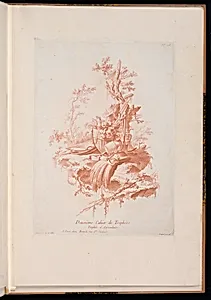
Trophée d’Agriculture
Classification
Department
Smithsonian Collection
Museum
Smithsonian American Art Museum
Credit
Purchased for the Museum by the Advisory Council
Accession Number
1921-6-483-5
Rights
Public Domain
About this artwork
Research in Progress
Art Historical Context
**Trophée d’Agricult** by French artist Henri Sallembier (ca. 1753–1820) is a captivating print created around 1775–76, now housed in the Smithsonian Art Museum. Acquired through the generosity of the Museum’s Advisory Council, this work exemplifies the elegant ornamental prints popular in late 18th-century France. Sallembier, during the waning years of the Ancien Régime, specialized in such designs, blending classical motifs with everyday symbolism to celebrate human endeavors. The title, translating to “Trophy of Agriculture,” evokes the neoclassical tradition of *trophées*—artistic assemblages of tools, harvests, and emblems arranged in harmonious vignettes. Produced on the eve of the French Revolution, it reflects Enlightenment ideals valorizing agriculture as the backbone of prosperity and national identity. As a print, its medium allowed wide dissemination, influencing decorative arts from furniture to architecture across Europe. Though research into this piece continues, *Trophée d’Agriculture* offers a window into pre-revolutionary France’s aesthetic refinement. Visitors might imagine it adorning a grand salon, reminding all of the fertile earth’s quiet bounty. (178 words)