
Trophy Design
late 18th century
Classification
Department
Smithsonian Collection
Museum
Smithsonian American Art Museum
Credit
Purchased for the Museum by the Advisory Council
Accession Number
1921-6-295-8
Rights
Public Domain
About this artwork
Research in Progress
Art Historical Context
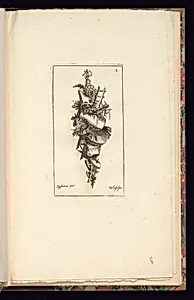
**Trophy Design** by Jean-Charles Delosse (French, 1734–1789) exemplifies the ornate decorative arts of late 18th France. Created during a period of stylistic transition from the playful Rococo to the more restrained Neoclassicism Delafosse was a prolific engraver and designer whose influenced architecture, furniture, and interiors across Europe. This print, housed in the Smithsonian American Art's collection (purchased by the Advisory Council), captures the era's fascination with symbolic "trophies"—elaborate assemblages of objects like laurels, shields, or instruments that conveyed triumph, virtue, or allegory. As a print, the work's medium allowed for precise reproduction and wide dissemination of intricate designs, making it a vital tool for artisans and architects. Trophy motifs adorned everything from wall panels to cartouches, reflecting Enlightenment ideals of harmony and classical revival. Though research on this specific piece is ongoing, it highlights Delafosse's mastery in blending fantasy with geometric precision. Visitors to the Smithsonian will appreciate how this artifact bridges European elegance with American collecting tastes, offering a window into the decorative vocabulary that shaped grand salons and public spaces of the time.