
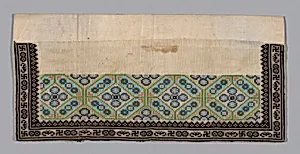
Trouser Band
Qing dynasty (1644–1911), 1875/1900
Medium
Forty-four pairs and eight odd pieces of embroidered sleeve, ankle bands, etc. on gauze.
Dimensions
16 × 33.3 cm (6 3/8 × 13 1/8 in.)
Classification
costume - embroidery
Department
Textiles
Museum
Art Institute of Chicago
Accession Number
156164
Rights
Public Domain
Art Historical Context
Nestled in the Art Institute of Chicago's Textiles, *Trouser Band* showcases the exquisite embroidery craftsmanship of Han-Chinese artisans during the late Qing dynasty (1644–1), dated around 1875–0. This delicate composite piece comprises forty-four pairs and eight individual bands—originally used for sleeves, ankles, and trouser hems—meticulously applied to a gauze foundation. Measuring a modest 16 × 33.3 cm, it the everyday elegance of Han Chinese costume, where such bands secured and adorned garments in a society valuing refined detail. Gauze, a sheer and lightweight silk fabric, served as an ideal ground for embroidery, allowing intricate stitches to shine through with luminous subtlety. Qing textile arts flourished under imperial patronage, blending functionality with artistry; these bands exemplify the period's technical mastery, likely featuring silk threads in vibrant patterns suited to daily or ceremonial wear. Their preservation highlights the durability of such humble yet sophisticated accessories. For visitors, this artwork offers a tactile glimpse into late imperial China's material culture, where clothing conveyed social status and ethnic identity. Imagine the nimble fingers of Han craftswomen transforming plain bands into wearable treasures— a testament to enduring tradition amid dynastic change.
About the Artist
Han-Chinese
**Han-Chinese** was the collective attribution given to anonymous artisans of Han Chinese descent who crafted intricate embroidered textiles during the Qing dynasty (1644–1911). These makers, active primarily in the late 18th to early 20th centuries, specialized in luxurious garments and furnishings that showcased the pinnacle of Han Chinese needlework traditions. Their early lives and individual ...