
Trouser Band
Qing dynasty (1644–1911), 1875/1900
Medium
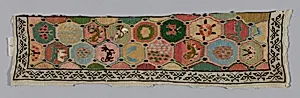
Design of dragons, butterflies, dogs, black and white border, embroidered on gauze.
Dimensions
10.6 × 36.8 cm (4 1/4 × 14 1/2 in.)
Classification
textile
Department
Textiles
Museum
Art Institute of Chicago
Accession Number
22075
Rights
Public Domain
Art Historical Context
### Trouser Band, Qing Dynasty This exquisite *Trouser Band* from the Qing dynasty (1644–1911), dated around 1875–1900, exemplifies the masterful textile arts of Han Chinese artisans. Measuring a modest 10.6 × 36.8 cm, this narrow embroidered strip on delicate gauze was likely used to adorn the waistband of trousers, adding elegance to everyday or ceremonial wear. Gauze, a sheer and lightweight silk fabric, provided an ideal canvas for intricate embroidery, allowing the designs to shimmer and catch the light. The band's vibrant motifs—dragons, butterflies, and dogs—framed by a striking black and white border, carry deep symbolic weight in Chinese culture. Dragons evoke imperial power and good fortune, butterflies symbolize joy and transformation, while dogs represent loyalty and protection. These elements, meticulously stitched with fine silk threads, showcase advanced embroidery techniques like satin stitch and padding, which create texture and depth on the translucent ground. Such craftsmanship highlights the Qing era's pinnacle of textile innovation. Housed in the Art Institute of Chicago's Textiles Department, this piece offers a glimpse into late imperial China's refined aesthetic sensibilities, where clothing served as a canvas for personal and cultural expression. A testament to enduring Han Chinese traditions, it invites us to appreciate the artistry woven into daily life.
About the Artist
Han-Chinese
**Han-Chinese** was the collective attribution given to anonymous artisans of Han Chinese descent who crafted intricate embroidered textiles during the Qing dynasty (1644–1911). These makers, active primarily in the late 18th to early 20th centuries, specialized in luxurious garments and furnishings that showcased the pinnacle of Han Chinese needlework traditions. Their early lives and individual ...