
Two Frieze Designs
ca.1660–1716
Classification
Department
Smithsonian Collection
Museum
Smithsonian American Art Museum
Credit
Purchased for the Museum by the Advisory Council
Accession Number
1921-6-333-24
Rights
Public Domain
About this artwork
Research in Progress
Art Historical Context
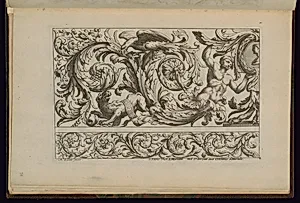
**Two Frieze Designs** by Alexis Loir (French, 1640–1713) showcases the artist's skill as an engraver during France's opulent late 17th century. Created around 1660–1716, this print captures two decorative frieze motifs—elongated bands of ornamentation typically used in architecture to adorn walls, ceilings, or furniture. Loir active in Paris amid the grandeur of Louis XIV's reign specialized in such designs, producing intricate patterns that blended classical motifs with emerging Baroque flourish. As a print, the work served a practical purpose: disseminating ornamental ideas to architects, sculptors, and artisans across Europe. Prints like this were revolutionary tools for standardizing decorative styles, influencing everything from grand palaces like Versailles to modest interiors. Though the exact medium remains under study, its classification highlights the era's mastery of engraving techniques, allowing fine details like scrolling foliage or mythological figures to be precisely reproduced. Housed in the Smithsonian American Art Museum, acquired through the Advisory Council, *Two Frieze Designs* offers a window into the collaborative world of French design. Ongoing research promises deeper insights, but it already evokes the lavish aesthetic that defined absolutist France, reminding visitors of art's role in shaping everyday elegance.