
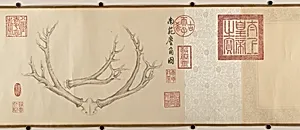
清 弘曆(乾隆皇帝) 鹿角雙幅 卷|Two Paintings of Deer Antlers
dated 1762 and 1767
Medium
Two handscrolls; ink and color on paper
Dimensions
a: 9 3/4 × 81 1/4 in. (24.8 × 206.4 cm) b: 9 7/8 × 81 1/4 in. (25.1 × 206.4 cm)
Classification
Paintings
Culture & Period
China · Qing dynasty (1644–1911)
Department
Asian Art
Museum
Metropolitan Museum of Art, New York, NY
Credit
John Stewart Kennedy Fund, 1913
Accession Number
13.220.127a, b
Rights
Public Domain
Tags
Art Historical Context
Behold the extraordinary *Two Paintings of Deer Ant* by the Qianlong Emperor (Hongli, r. 1735–96), two exquisite handscrolls dated 1762 and 1767, rendered in ink color on paper. Measuring seven feet in length each, these Qing dynasty treasures from the Metropolitan Museum of Art capture the intricate branching forms of deer antlers with detail. Created during the height of imperial patronage for the arts, they exemplify the emperor's personal engagement as an artist, a rare facet of his multifaceted rule. In Chinese culture, deer symbolize longevity, prosperity, and harmony, often linked to immortals and the pursuit of eternal life. Antlers, as natural marvels, reflect the Qing court's fascination with nature's wonders, blending scientific observation with poetic reverence. Handscrolls, a traditional format, invite slow unrolling, allowing viewers to immerse in the antlers' rhythmic curves and textures—achieved through delicate ink washes and subtle color accents that highlight their organic elegance. These works not only showcase imperial virtuosity but also underscore the Qianlong era's cultural zenith, where art bridged the natural world and scholarly ideals. A captivating glimpse into an emperor's hand, they remind us of art's power to immortalize fleeting beauty.