
Two-Spouted Vessel with a Lid
Unknown Artist
12th century
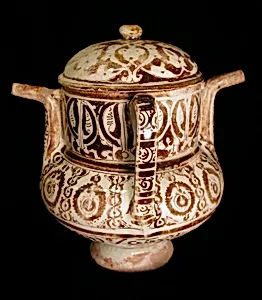
Medium
Stonepaste; luster-painted on opaque white glaze
Dimensions
H. 8 in. (20.3 cm) Diam. 6 1/2 in. (16.5 cm)
Classification
Ceramics
Department
Islamic Art
Museum
Metropolitan Museum of Art, New York, NY
Credit
Purchase, Friends of Islamic Art and The Samuel I. Newhouse Foundation Inc. Gift, 2009
Accession Number
2009.425a, b
Rights
Public Domain
Art Historical Context
This elegant two-spouted vessel with a lid, crafted in the 12th, exemplifies the ingenuity of Islamic ceramic artistry. Hailing from the Islamic world—likely regions like Iran or Syria during the Seljuk era—it stands at 8 inches tall with a 6½-inch diameter, perfect for practical yet luxurious use, such as pouring scented waters or oils from either spout. Its form reflects the blend of functionality and ornamentation prized in medieval Islamic households and courts. Made of stonepaste (a composite of quartz, clay, and glass frit), the vessel features luster-painting on an opaque white glaze—a groundbreaking technique developed by Islamic potters around the 9th century to imitate coveted Chinese porcelain. The luster effect, achieved by applying metallic oxides and firing in a reduced-oxygen kiln, creates a shimmering, iridescent glow that catches the light like gold or silver. This opulent method symbolized wealth and technical mastery, reserved for elite patrons. Acquired by the Metropolitan Museum of Art in 2009 through generous gifts, this piece highlights the cultural exchange along Silk Road trade routes, where Islamic artisans pushed ceramic innovation to new heights. Visitors, pause to admire how its subtle sheen evokes the splendor of a bygone era.