
Two Trophy Designs
Classification
Department
Smithsonian Collection
Museum
Smithsonian American Art Museum
Credit
Purchased for the Museum by the Advisory Council
Accession Number
1921-6-508-6
Rights
Public Domain
About this artwork
Research in Progress
Art Historical Context
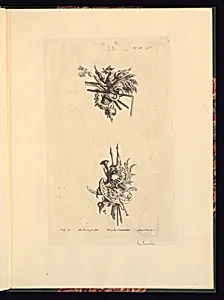
**Two Trophy Designs** by Jacques Ignace de Lat (French, 1694–1781), created around 1750, exemplifies the exquisite ornamental prints that defined 18th-century French design As a skilled engraver active in Paris, Latouche in intricate motifs for decorative arts, and this work presents two elaborate "trophies"—festive assemblages of symbolic objects like weapons, musical instruments, or harvest bounty, evoking triumph and abundance. Though the exact medium remains under study, its classification as a print underscores its role in disseminating precise patterns to craftsmen across Europe. In the lavish Rococo era under Louis XV, such designs adorned everything from grand furniture and silverwork to architectural cartouches, blending playfulness with technical virtuosity. Latouche's clean lines and dynamic compositions captured the period's taste for asymmetry and exuberance, influencing interiors that celebrated aristocratic leisure. Acquired for the Smithsonian American Art Museum through the Advisory Council, this piece from the Smithsonian Collection bridges French elegance with American appreciation for European prints. Ongoing research promises deeper insights into its production and patrons, inviting visitors to ponder how these timeless motifs shaped global decorative traditions.