
Untitled
1839/99
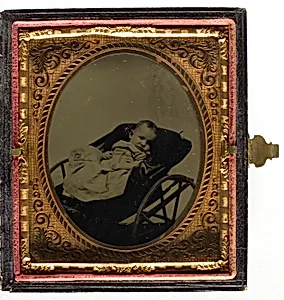
Medium
Tintypes
Dimensions
Each plate: 8.3 × 7 cm (3 5/16 × 2 13/16 in.); Case: 9.4 × 8.2 × 2 cm (3 3/4 × 3 1/4 × 13/16 in.)
Classification
daguerreotype
Department
Photography and Media
Museum
Art Institute of Chicago
Accession Number
61080
Rights
Public Domain
Art Historical Context
This untitled work from around 1839–1899, housed in the Art Institute of's Photography and Media department exemplifies the intimate scale of early photography. Classified as a daguerreotype noted in tintype medium, it features small plates measuring just 8.3 × 7 cm each, in a compact 9.4 × 8.2 × 2 cm holder—perfect for personal keepsakes like lockets or pocket cases. With an unknown artist, the piece invites us to ponder the anonymous hands behind these pioneering images. Daguerreotypes, invented by Louis Daguerre in 1839, marked photography's public debut, capturing astonishing detail on silvered copper plates through a mercury vapor development process. Tintypes, emerging slightly later on iron sheets, offered a more affordable, durable alternative by the 1850s. This hybrid example highlights the rapid evolution of the medium during the 19th century, when photography shifted from elite novelty to everyday portraiture, preserving fleeting moments for families amid industrialization and migration. Viewers are drawn to the artwork's mirror-like sheen, requiring careful angles for the full image to emerge—a reminder of photography's alchemical magic. These tiny treasures reflect a cultural hunger for self-representation, bridging painting's portrait tradition with modernism's mechanical gaze.
About the Artist
Unknown
The artist designated as "Unknown" in our virtual museum's collection exemplifies a poignant chapter in art history: creators whose identities have faded into obscurity despite the enduring power of their work. With only one known artwork attributed to them in our holdings, this figure represents countless anonymous hands that shaped visual culture across centuries. Museums worldwide, including th...