
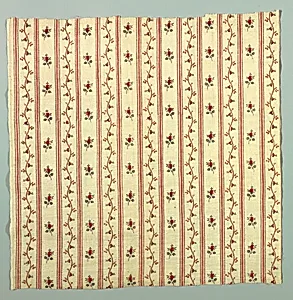
Valance
ca. 1790
Medium
printed, dyed & painted textiles
Classification
printed, dyed & painted textiles
Department
Smithsonian Collection
Museum
Smithsonian American Art Museum
Credit
Smithsonian American Art Museum
Accession Number
1952-80-10
Rights
Public Domain
About this artwork
Research in Progress
Art Historical Context
This elegant valance, dating to around 1790, is a fine example of late 18th-century American from the Smithsonian American Art Museum's collection. Valances were decorative hangings draped over bedposts, windows or hearths in colonial homes, adding color and pattern to everyday spaces. Crafted by an unknown artist, this piece reflects the skilled domestic arts of the early American republic, where homemakers and artisans transformed fabric into personalized statements of style and comfort. The medium—printed, dyed, and painted textiles—highlights innovative techniques of the era. Printing involved block or roller methods to apply motifs, while dyeing with natural or early chemical pigments created vibrant hues, and hand-painting added intricate details. These labor-intensive processes made such items prized possessions, often showcasing floral, pastoral, or geometric designs inspired by English and European imports adapted to American tastes. Though research on this specific valance is ongoing, it embodies the craftsmanship that bridged household utility and artistic expression during a time of national identity formation. Visiting this artifact offers a glimpse into the lives of Americans post-Revolution, where textiles like this valance wove together practicality, creativity, and cultural aspiration in the home.
About the Artist
Unknown
The artist designated as "Unknown" in our virtual museum's collection exemplifies a poignant chapter in art history: creators whose identities have faded into obscurity despite the enduring power of their work. With only one known artwork attributed to them in our holdings, this figure represents countless anonymous hands that shaped visual culture across centuries. Museums worldwide, including th...