
Vase
Unknown Artist
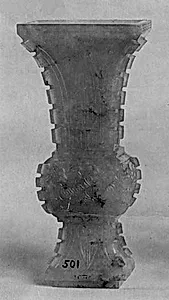
Medium
Jadeite, emerald-green mingled with light gray and markings of dead oak leaf
Dimensions
H. 4 1/8 in. (10.5 cm); W. 15/16 in. (4.9 cm); D. 1 3/16 in. (3 cm)
Classification
Jade
Culture & Period
China · Qing dynasty (1644–1911), Qianlong period (1736–95)
Department
Asian Art
Museum
Metropolitan Museum of Art, New York, NY
Credit
Gift of Heber R. Bishop, 1902
Accession Number
02.18.501
Rights
Public Domain
Art Historical Context
This exquisite small vase, crafted from jadeite during China's Qing dynasty Qianlong period (173695), exemplifies the era's mastery of jade carving. Standing just over 4 inches tall, its slender form—measuring 4 1/8 inches high, 15/16 inches wide, and 1 3/16 inches deep—suggests it may have served as a delicate incense burner or a scholar's desk ornament, objects prized for their refinement in imperial and elite circles. The vase's medium is striking: translucent jadeite in emerald-green tones mingled with light gray, accented by natural markings resembling dead oak leaves. Jade, revered in Chinese culture as a symbol of purity, immortality, and moral virtue, reached new heights of artistry under Emperor Qianlong, whose workshops produced some of the finest examples. Artisans skillfully exploited the stone's inherent veining and color variations, transforming raw material into poetic forms without overpowering its natural beauty—a testament to technical precision and aesthetic harmony. A gift to the Metropolitan Museum of Art from Heber R. Bishop in 1902, this anonymous masterpiece invites visitors to appreciate the subtle elegance of Qing jade, where less is profoundly more.