
Vase
Unknown Artist
probably 18th–19th century
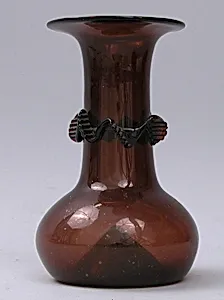
Medium
Glass; free blown with applied decoration
Dimensions
H. 5 1/4 in. (13.3 cm) Max. Diam. 3 1/4 in. (8.2 cm)
Classification
Glass
Department
Islamic Art
Museum
Metropolitan Museum of Art, New York, NY
Credit
Gift of Samuel L. M. Barlow, 1883
Accession Number
83.6.13
Rights
Public Domain
Art Historical Context
This delicate glass vase, hailing from the Islamic Art collection at the Metropolitan Museum of Art exemplifies the refined craftsmanship of the 18th–19th. Standing just 5¼ inches tall with a maximum diameter of ¼ inches, its petite scale suggests it may have served as a perfume bottle, inkwell, or ornamental table piece in a Middle Eastern or Ottoman household. Gifted to the museum in 1883 by Samuel. M. Barlow, it invites visitors to appreciate the subtle elegance of everyday luxury in Islamic culture. Crafted using the free-blown technique, the vase was shaped by blowing molten glass through an iron tube, allowing artisans to create fluid, organic forms without molds—a hallmark of Islamic glassmaking that prized spontaneity and skill. Applied decoration, likely trails or threads of contrasting glass added while still molten, adds tactile and visual interest, showcasing the glassblower's mastery over heat and viscosity. This method, perfected over centuries in regions like Syria, Egypt, and Persia, highlights Islam's contributions to glass technology during a period of artistic continuity amid empire shifts. Though the artist remains unknown, this vase reflects the enduring Islamic tradition of translucent, functional beauty, where form met utility in objects that brightened daily life. A quiet treasure, it reminds us how even small artifacts carry the echoes of vibrant civilizations.