
Vase
Unknown Artist
late 17th–early 18th century
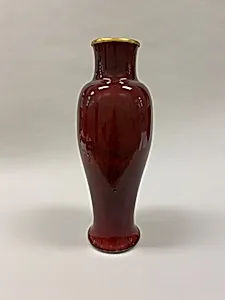
Medium
Porcelain with ox-blood red glaze (Jingdezhen ware), gilt bronze mouth rim
Dimensions
H. 19 3/8 in. (49.2 cm); Diam. 7 1/4 in. (18.4 cm)
Classification
Ceramics
Culture & Period
China · Qing dynasty (1644–1911), Kangxi period (1662–1722)
Department
Asian Art
Museum
Metropolitan Museum of Art, New York, NY
Credit
Bequest of Benjamin Altman, 1913
Accession Number
14.40.112
Rights
Public Domain
Art Historical Context
This elegant vase, crafted in China's Jingdezhen kilns during the Kangxi (1662–1722) of the Qing dynasty exemplifies the pinnacle of imperial porcelain production in the late 17th early 18th century. Standing at 19 3/8 inches tall with 7 1/4-inch diameter, its slender form and vibrant ox-blood red glaze—known as *sang de boeuf* for its rich, blood-like hue—capture the era's technical mastery. The addition of a gilt bronze mouth rim hints at later European adaptation, blending Chinese artistry with Western tastes. Jingdezhen, the porcelain capital, was renowned for innovations under Emperor Kangxi, whose reign spurred exquisite monochromes like this ox-blood glaze. Achieving the glaze's even, crackled crimson required precise control of copper oxide in the high-fired kiln, a feat that often yielded imperfect results—making flawless examples like this one rare and highly prized. These vases were symbols of refinement, adorning scholarly studios or elite collections. Bequeathed to the Metropolitan Museum of Art in 1913 by American collector Benjamin Altman, this piece reflects the global allure of Kangxi porcelain, bridging East and West in the Asian Art galleries. Visitors will appreciate its luminous glow, a testament to enduring craftsmanship.