
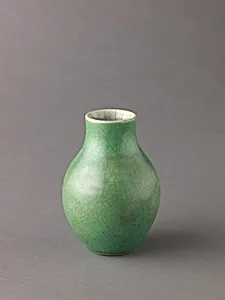
Vase
probably 19th century
Medium
Porcelaneous stoneware with apple-green glaze.
Dimensions
Height: 4 3/4 in. (12 cm.)
Classification
Ceramics
Culture
Chinese
Department
Robert Lehman Collection
Museum
Metropolitan Museum of Art, New York, NY
Credit
Robert Lehman Collection, 1975
Accession Number
1975.1.1684
Rights
Public Domain
Art Historical Context
This delicate vase, hailing from China and likely crafted in the 19th century, exemplifies refined artistry of Qing dynasty ceramics. Standing just 4 3/4 inches (12 cm) tall, it is made of porcelaneous stoneware—a dense, high-fired clay that mimics the translucency and strength of true porcelain—coated in a vibrant apple-green glaze. This monochrome glaze, achieved through precise control of iron oxide in the kiln at high temperatures, produces a soft, luminous hue reminiscent of jade, a material revered in Chinese culture for its purity and imperial associations. The apple-green glaze technique traces back to earlier Song dynasty celadons but flourished in the Qing era, when imperial kilns at Jingdezhen innovated subtle color variations for scholarly and decorative objects. Such vases were prized by literati for display in studies or altars, symbolizing harmony with nature. Though small, this piece showcases masterful potting and glazing, highlighting China's enduring ceramic legacy. Now part of the Robert Lehman Collection at The Metropolitan Museum of Art since 1975, it invites visitors to appreciate the subtlety of Chinese monochromes amid grander porcelains, offering a intimate glimpse into 19th-century craftsmanship.
About the Artist
Chinese
The artist known simply as "Chinese" in museum records represents the vast tradition of anonymous or unattributed masters in Chinese art history, with 99 works preserved in our collection. These pieces exemplify the enduring legacy of guó huà, or traditional Chinese painting, one of the world's oldest continuous artistic practices. Early life is not well documented, as is common for many practitio...