
Vase
Unknown Artist
late 17th–early 18th century
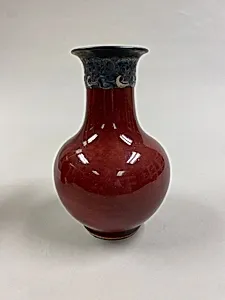
Medium
Porcelain with copper red glaze (Jingdezhen ware), silver mounts
Dimensions
H. 7 1/8 in. (18.2 cm); Diam. 4 3/4 in. (12.1 cm)
Classification
Ceramics
Culture & Period
China · Qing dynasty (1644–1911), Kangxi period (1662–1722)
Department
Asian Art
Museum
Metropolitan Museum of Art, New York, NY
Credit
Bequest of Benjamin Altman, 1913
Accession Number
14.40.125
Rights
Public Domain
Art Historical Context
This exquisite porcelain vase, crafted in Jingdezhen—the renowned imperial kiln center of China—dates to the Kangxi period (1662–1722) of the Qing dynasty. Standing just over 7 inches tall, compact baluster form exemplifies the refined elegance of late 17th- to early 18th-century, produced during a golden age of porcelain innovation under Emperor Kangxi's patronage. Adorned with European silver mounts, it reflects the global exchange of luxury goods, as Chinese porcelains were prized and adapted by Western collectors. The vase's standout feature is its copper red glaze, a challenging monochrome effect achieved through precise control of copper oxide in the kiln. Known as "sang de boeuf" or oxblood for its deep, vibrant crimson hue, this glaze demanded masterful firing techniques at Jingdezhen's high-temperature kilns, often resulting in subtle variations from ruby red to purplish tones. Such pieces were symbols of technical virtuosity and imperial taste, reserved for elite connoisseurs. Bequeathed to The Metropolitan Museum of Art in 1913 by Benjamin Altman, this vase offers a window into Qing China's artistic prowess and its role in shaping international aesthetics. Visitors will appreciate its luminous glow, a testament to enduring craftsmanship.