
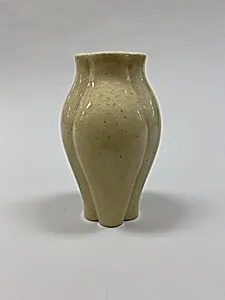
Vase
Unknown Artist
19th century
Medium
Porcelain with light yellow glaze (Jingdezhen ware)
Dimensions
H. 6 3/8 in. (16.2 cm); W. 3 7/8 in. (9.8 cm); Diam. 3 3/8 in. (8.6 cm)
Classification
Ceramics
Culture & Period
China · Qing dynasty (1644–1911)
Department
Asian Art
Museum
Metropolitan Museum of Art, New York, NY
Credit
Edward C. Moore Collection, Bequest of Edward C. Moore, 1891
Accession Number
91.1.415
Rights
Public Domain
Art Historical Context
This petite porcelain vase from China's Qing dynasty (1644–1), crafted in the19th century, showcases the renowned Jingdezhen ware tradition. Measuring just 6⅜ inches high, with a graceful width of 3⅞ inches and a diameter of 3⅜ inches, its light yellow glaze offers a subtle, luminous elegance. Jingdezhen, imperial porcelain center, was celebrated for producing technically flawless ceramics that blended functionality with refined beauty, often destined for elite households or display. The vase's monochrome glaze exemplifies Qing-era innovation in ceramic techniques, where subtle color variations highlighted the material's translucency and purity. Yellow glazes held cultural prestige, evoking imperial associations and harmony in Chinese aesthetics. Such vessels served practical yet decorative roles, holding flowers or incense, symbolizing prosperity and refinement in scholarly or domestic settings. Acquired through the Edward C. Moore Collection and bequeathed to the Metropolitan Museum of Art in 1891, this anonymous work honors the skilled, unnamed artisans of Jingdezhen whose legacy endures in global collections.