
Vase
19th century
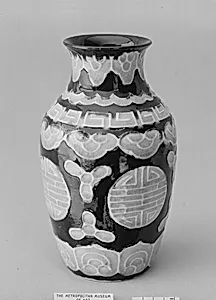
Medium
Clay covered with glazes (Kairakuen ware)
Dimensions
H. 5 3/4 in. (14.6 cm); Diam. 3 3/8 in. (8.6 cm); Diam. of rim 2 1/8 in. (5.4 cm); Diam. of base 2 1/4 in. (5.7 cm)
Classification
Ceramics
Culture & Period
Japan · Edo (1615–1868) or Meiji period (1868–1912)
Department
Asian Art
Museum
Metropolitan Museum of Art, New York, NY
Credit
Purchase by subscription, 1879
Accession Number
79.2.978
Rights
Public Domain
Art Historical Context
This elegant vase, crafted by the Japanese artist Eiraku Hozen in the 19th century, represents a refined example of Kairakuen ware from Japan's Edo (1615–1868) or Meiji (1868–1912) periods. Created during a time of cultural transition, it reflects the enduring traditions of Japanese ceramics even as the nation began engaging more with the wider world. Hozen, working within a family lineage of potters, produced works that highlight the meticulous artistry of the era. The piece is formed from clay and adorned with layered glazes, a technique central to Kairakuen ware that produces rich, harmonious surfaces. Such vessels were often valued for both their functional beauty and decorative appeal, embodying the Japanese appreciation for natural forms and subtle color variations achieved through firing. Acquired by the Metropolitan Museum of Art in 1879 through public subscription, this vase underscores the growing Western fascination with Asian ceramics during the late 19th century. Its modest yet sophisticated scale invites viewers to appreciate the quiet mastery of Japanese ceramic traditions.
About the Artist
Eiraku Hozen · 1795–1854
Eiraku Hozen (1795–1854) was a celebrated Japanese ceramic artist and the sixteenth-generation head of the Nishimura family, a Kyoto dynasty of potters whose work was closely associated with the tastes of the imperial court and the refined aesthetic culture of the ancient capital. Operating under the artistic name Eiraku — a name that would become synonymous with a particular style of elegant, tec...