
Vessel Stamp
Unknown Artist
8th century
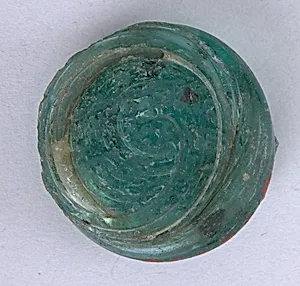
Medium
Glass
Dimensions
H. 7/16 in. (1.1 cm) Diam. 1 1/8 in. (2.9 cm) Wt. 0.4 oz. (11.3 g)
Classification
Glass
Department
Islamic Art
Museum
Metropolitan Museum of Art, New York, NY
Credit
Rogers Fund, 1908
Accession Number
08.256.9
Rights
Public Domain
Tags
Art Historical Context
Nestled in the Metropolitan Museum of Art's Islamic Art collection, delicate *Vessel Stamp* from 8th century exemplifies exquisite glassworking prowess of early Islamic artisans. Crafted glass, it measures just 7/16 inch (1.1 cm) in height and 1 1/8 inch (2.9 cm) in diameter, weighing a mere 0.4 oz. (11.3 g)—small enough to fit in the palm of your hand. Acquired through the Rogers Fund in 8, this tiny object reveals the precision and innovation of Abbasid-era craftsmen during a golden age of Islamic material culture. In the 8th century, as the Islamic world flourished under the Abbasid Caliphate, glass became a favored medium for both utilitarian and decorative items. Techniques like molding and cutting allowed for intricate designs on such diminutive scales. Classified as a glass artifact and tagged as a writing implement, this stamp likely served to imprint seals on clay stoppers, wax, or documents, marking ownership, contents, or authenticity on vessels—a practical tool blending artistry with daily commerce. Its survival highlights the cultural importance of seals in Islamic society, where they ensured trade integrity across vast empires from Baghdad to beyond. Though by an unknown artist, this unassuming gem invites us to marvel at the blend of functionality and finesse in early Islamic design.