
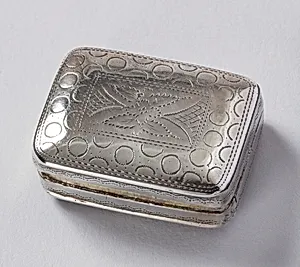
Vinaigrette
1815–16
Classification
containers
Department
Smithsonian Collection
Museum
Smithsonian American Art Museum
Credit
Gift of Mrs. Charles W. Lester
Accession Number
1964-15-3-a,b
Rights
Public Domain
About this artwork
Research in Progress
Art Historical Context
**Vinaigrette by John Shaw (1815–16)** into the refined world of early 19th-century America with John Shaw's *Vina*, a delicate personal container crafted around 1815–16. Vinaigrettes like this were essential accessories for gentlemen and ladies alike, designed to hold aromatic vinegar or smelling salts. These portable scent boxes offered a discreet shield against urban odors or the vapors that might induce fainting—a common concern in an era before modern hygiene. Produced during the optimistic years following the War of 1812, this piece reflects the growing sophistication of American craftsmanship as the young nation asserted its cultural independence. Though the medium remains under study—part of ongoing research at the Smithsonian American Art Museum—this vinaigrette falls into the category of finely made containers, highlighting the artistry of everyday objects. Donated as a gift from Mrs. Charles W. Lester, it joins the Smithsonian Collection, preserving a slice of domestic life from the Federal period. Shaw's work exemplifies how skilled makers elevated functional items into elegant heirlooms, blending utility with subtle aesthetic appeal. Imagine carrying this in your pocket or reticule, its hinged lid releasing a whiff of lavender amid bustling city streets. As research progresses, *Vinaigrette* invites us to appreciate the quiet elegance of objects that scented daily life in early America.