
Vinegar Cruet
c. 1936
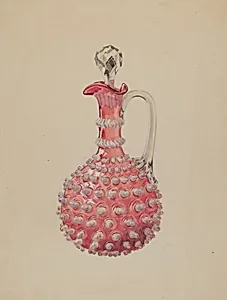
Medium
watercolor, graphite, and goauche on paper
Dimensions
overall: 30.1 x 22.9 cm (11 7/8 x 9 in.)
Classification
Index of American Design
Department
CG-W
Museum
National Gallery of Art, Washington, D.C.
Credit
Index of American Design
Accession Number
1943.8.11158
Rights
Public Domain
Art Historical Context
Dorothy Posten's *Vinegar Cruet* (c. 1936) is a delicate yet precise rendering of an everyday American household object, captured through watercolor, graphite, and gouache on paper. Measuring 30.1 x 22.9 cm, this work exemplifies the meticulous technique favored by artists in the Index of American Design (IAD), a Federal Art Project under the Works Progress Administration (WPA). Posten, one of many talented women artists employed during the Great Depression, used graphite for fine outlines, translucent watercolors for subtle shading, and opaque gouache for vibrant highlights, creating a lifelike study that elevates a simple cruet—likely a glass vessel for vinegar—into a testament to American craftsmanship. Created as part of the IAD (1935–1942), this artwork documents the nation's rich material culture, from folk art to utilitarian designs, preserving objects at risk of being lost to time or modernity. The project employed over 400 artists to produce more than 15,000 watercolor renderings, fostering national pride and providing economic relief amid the Depression. Posten's depiction highlights the cruet's elegant form, possibly reflecting early American glassmaking traditions, and underscores the IAD's mission to celebrate democratic design. Today, housed in the National Gallery of Art's collection, *Vinegar Cruet* invites visitors to appreciate the beauty in the ordinary, reminding us how art can safeguard cultural heritage for future generations.
About the Artist
Dorothy Posten · 1855–present
Dorothy Posten was an American artist active during the mid-1930s, best known for her meticulous contributions to the Index of American Design, a Federal Art Project initiative under the Works Progress Administration (WPA). Launched in 1935, this ambitious endeavor employed artists across the United States to document the nation's folk art, crafts, and decorative traditions through detailed render...