
Viola
1757
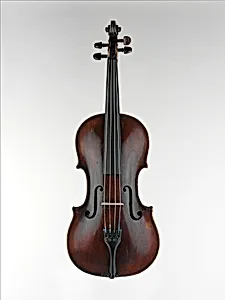
Medium
Wood
Dimensions
Height: 16 7/16 in. (41.8 cm)
Classification
Chordophone-Lute-bowed-unfretted
Culture
American
Department
Musical Instruments
Museum
Metropolitan Museum of Art, New York, NY
Credit
Purchase, Frederick M. Lehman Bequest, 2007
Accession Number
2007.228a, b
Rights
Public Domain
Art Historical Context
Crafted in 1757 by American maker Robert Horne, this viola stands as a rare surviving example of colonial instrument-making. Created well before the American Revolution, it reflects the growing demand for music in homes, churches, and civic gatherings across the British colonies, where European imports were costly and sometimes scarce. Horne’s work demonstrates the emergence of local craftsmanship adapting traditional European designs to New World conditions. Carved from wood and classified as a chordophone-lute-bowed-unfretted, the instrument belongs to the viola family, designed for expressive bowed playing without frets. Its modest height of just over sixteen inches suggests a practical size suited to both amateur and professional musicians of the period. Such instruments helped shape the sound of early American chamber music and psalmody. Acquired by the Metropolitan Museum in 2007, this viola offers visitors a tangible connection to the musical life of eighteenth-century America and the skilled hands that supported it.