
Violin Horn
Unknown Artist
ca. 1800–1899
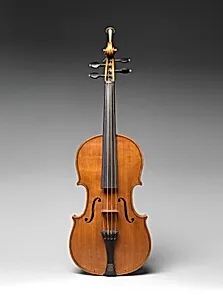
Medium
Wood, brass, various materials
Dimensions
Overall: 21.6 x 60.3cm (8 1/2 x 23 3/4in.)
Classification
Chordophone-Lute-bowed-unfretted
Culture
French
Department
Musical Instruments
Museum
Metropolitan Museum of Art, New York, NY
Credit
The Crosby Brown Collection of Musical Instruments, 1889
Accession Number
89.4.2704
Rights
Public Domain
Art Historical Context
Nestled in the Metropolitan Museum of Art's renowned Crosby Brown Collection of Musical Instruments the *Violin Horn* (ca. 1800–1899) is a example of 19th-century French ingenuity. Crafted from wood, brass, and materials, this hybrid instrument measures 21.6 x 60.3 cm and belongs to the chordophone-lute-bowedfretted classification—a bowed string instrument with a lute-like body and no fre, akin to a violin but enhanced with a horn element for unique acoustic projection. Emerging from France during a period of musical experimentation, the *Violin Horn* reflects the era's fascination with blending string and wind principles to amplify sound in performance settings. Its construction highlights skilled craftsmanship, combining the resonant wood of traditional bowed instruments with brass for tonal extension, making it both a functional tool and a sculptural marvel. Though the artist remains unknown, this piece underscores the cultural vibrancy of French musical traditions, offering visitors a tangible link to the sounds of bygone street musicians and salons. A testament to innovation without electricity, it invites us to imagine its lively strains echoing through 19th-century boulevards.