
Virgin and Child
Unknown Artist
1270–80
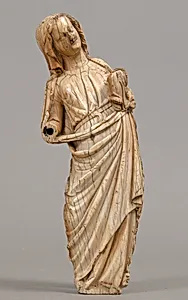
Medium
Ivory
Dimensions
Overall: 7 7/8 x 2 11/16 x 1 5/8 in. (20 x 6.8 x 4.2 cm)
Classification
Ivories
Culture
North French
Department
Medieval Art
Museum
Metropolitan Museum of Art, New York, NY
Credit
Gift of J. Pierpont Morgan, 1917
Accession Number
17.190.190
Rights
Public Domain
Tags
Art Historical Context
This delicate ivory statuette of the *Virgin and Child*, crafted by an unknown North French artist around 1270–80, exemplifies the devotional art of the High Gothic period. just under 8 inches tall, it captures the tender intimacy between Mary and the infant Jesus, a ubiquitous theme in medieval Christian iconography symbolizing divine motherhood and humanity's salvation. Produced in northern France—a hub for Gothic sculpture—this piece likely served as a personal prayer object for nobility or clergy, portable enough for private altars or travel. Ivory, sourced from elephant tusks, was a luxurious medium prized for its creamy translucency and carvability, allowing intricate details like the Virgin's flowing drapery and serene expression. North French ivories from this era often featured elegant, elongated figures influenced by Gothic cathedrals, blending spiritual grace with refined craftsmanship. Though anonymous, the sculptor's skill reflects workshops in Paris or nearby regions, where such objects were exported across Europe. Today, this treasure resides in the Metropolitan Museum of Art's Medieval Art department, a 1917 gift from J. Pierpont Morgan. It invites visitors to ponder the era's profound faith and artistic devotion, bridging 13th-century piety with our modern gaze.