
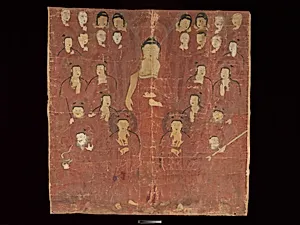
영산희상도|靈山會上圖)|Vulture Peak Assembly
mid-18th century
Medium
Unmounted; ink, gold, silver and white pigment on silk
Dimensions
Image: 84 × 80 in. (213.4 × 203.2 cm)
Classification
Paintings
Culture & Period
Korea · Joseon dynasty (1392–1910)
Department
Asian Art
Museum
Metropolitan Museum of Art, New York, NY
Credit
Purchase, Michael and Kathleen Linburn Gift, 2021
Accession Number
2021.117
Rights
Public Domain
Art Historical Context
This monumental painting, titled *Vulture Peak Assembly* (영산회상도), captures a pivotal moment in Mahayana Buddhism: the Buddha’s sermon on Mount Grdhrakuta, where he expounded the Lotus Sutra to a vast gathering of disciples, bodhisattvas, and heavenly beings. Created in mid-18th-century Korea during the Joseon dynasty, the work reflects the enduring vitality of Buddhist devotion even as Neo-Confucianism dominated court culture. Large-scale temple banners like this one were commissioned for ritual ceremonies, helping worshippers visualize the transcendent assembly and participate in its spiritual merit. The unidentified artist employed delicate ink outlines enriched with gold, silver, and white pigment on silk, a technique that produces a luminous, otherworldly glow when the painting is viewed in temple lamplight. The generous use of precious metals underscores the sacred status of the subject and the generosity of its donors. Measuring over two meters square, the unmounted silk format suggests it was designed to be hung temporarily during special observances and then carefully stored. As a rare surviving example of late-Joseon Buddhist painting, this work offers visitors a window into Korea’s rich religious artistic tradition. Its acquisition by the Metropolitan Museum in 2021 ensures that audiences today can appreciate both the devotional purpose and the refined craftsmanship that defined Buddhist visual culture for centuries.