
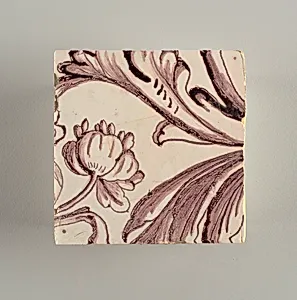
Wall facing
ca. 1725
Classification
tiles
Department
Smithsonian Collection
Museum
Smithsonian American Art Museum
Credit
Gift of William Randolph Hearst
Accession Number
1926-43-5-521
Rights
Public Domain
About this artwork
Research in Progress
Art Historical Context
This enigmatic "Wall Facing," dating to around 1725, is a captivating example of early 18th tilework housed in the Smithsonian American Art. Classified simply as "tiles," it likely served as a decorative architectural element, cladding a wall in a home or public space during the Colonial era. With the artist unknown and medium yet to be specified, the invites us to ponder the craftsmanship of anonymous artisans whose work adorned everyday American life, blending utility with subtle artistry. Acquired as a gift from media magnate and avid collector William Randolph Hearst, whose eclectic tastes spanned global treasures, this artifact entered the Smithsonian Collection, highlighting the era's transatlantic influences. Tiles from this period often drew from European traditions like Dutch Delft or English delftware, adapted for New World interiors—think fire surrounds or chimney backs that warmed both rooms and imaginations. Research into the "Wall Facing" is ongoing, underscoring how such modest objects hold untapped stories of trade, migration, and domestic culture. A quiet testament to pre-Revolutionary craftsmanship, it reminds museum visitors of the unsung beauty in our shared history. (198 words)
About the Artist
Unknown
The artist designated as "Unknown" in our virtual museum's collection exemplifies a poignant chapter in art history: creators whose identities have faded into obscurity despite the enduring power of their work. With only one known artwork attributed to them in our holdings, this figure represents countless anonymous hands that shaped visual culture across centuries. Museums worldwide, including th...