
Wall Hanging Composed of Five Panels
1850/75
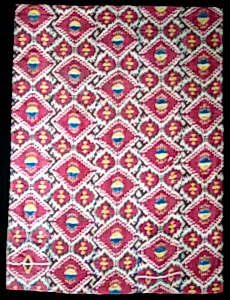
Medium
Silk, cotton, warp-faced plain weave; warp-dyed (ikat)
Dimensions
183 × 132.1 cm (72 × 52 in.)
Classification
textile
Department
Textiles
Museum
Art Institute of Chicago
Accession Number
185615
Rights
Public Domain
Art Historical Context
This stunning wall hanging, composed of five meticulously joined panels, dates to the mid-19th century (circa 1850–1875) and exemplifies the artistry of anonymous textile makers. Measuring an impressive 183 × 132.1 cm (72 × 52 in.), it was designed for display, transforming a simple fabric into a bold architectural element for homes or public spaces. Its vibrant patterns, achieved through innovative dyeing, reflect the era's fascination with colorful, patterned textiles amid global trade in silk and cotton. Crafted from silk and cotton in a warp-faced plain weave, the piece employs the ancient ikat technique—where warp threads are resist-dyed (tied and bound) before weaving. This creates the signature feathery, blurred edges in the motifs, a labor-intensive process demanding precision to align patterns across panels. Ikat, originating from Indonesian roots meaning "to tie," spread across Asia and beyond, highlighting skilled craftsmanship over centuries. As a textile artifact, this wall hanging underscores the cultural role of fabrics in 19th-century decoration and identity, bridging utility and fine art. Though its exact origin remains unknown, it invites visitors to appreciate the ingenuity of warp-ikat masters, whose work adorned lives with enduring beauty.
About the Artist
Unknown
The artist designated as "Unknown" in our virtual museum's collection exemplifies a poignant chapter in art history: creators whose identities have faded into obscurity despite the enduring power of their work. With only one known artwork attributed to them in our holdings, this figure represents countless anonymous hands that shaped visual culture across centuries. Museums worldwide, including th...