
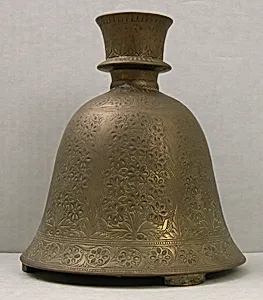
Water Pipe Base
Unknown Artist
19th century
Medium
Brass
Dimensions
H. 7 1/4 in. (18.4 cm) Diam. 6 5/8 in. (16.8 cm)
Classification
Metal
Department
Islamic Art
Museum
Metropolitan Museum of Art, New York, NY
Credit
Rogers Fund, 1907
Accession Number
07.67.22
Rights
Public Domain
Art Historical Context
This elegant brass water pipe base, crafted by an unknown artist in the19th century, exemplifies refined metalworking traditions of Islamic art. Standing at 7¼ inches high and 6⅝ inches in diameter, its sturdy form was designed to hold water for cooling tobacco smoke in a hookah, or nargile—a social accessory integral to Ottoman and Middle Eastern culture. Acquired through the Rogers Fund in 1907 and now housed in the Metropolitan Museum Art's Islamic Art department it reflects the period's emphasis on functional beauty in everyday objects. In the 19th century, as the Ottoman Empire and neighboring regions flourished in artisanal crafts, brass was a favored medium for its malleability and golden sheen. Artisans skillfully cast and hammered such bases, often adorning them with intricate motifs, though this piece highlights the material's inherent luster and precise proportions. Water pipes like this one were more than utilitarian; they symbolized hospitality, gathering friends in coffeehouses or homes for leisurely conversations amid fragrant tobacco clouds. Today, this artifact offers a glimpse into the cultural rituals of the Islamic world, where craftsmanship blended utility with subtle artistry. Its preservation underscores the Met's commitment to showcasing the diverse ingenuity of metalwork from this era.