
Water Pot
Unknown Artist
19th century
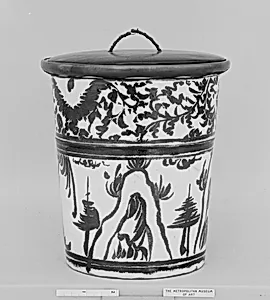
Medium
Clay decorated on a white glaze (Kyoto ware)
Dimensions
H. 7 1/2 in. (19.1 cm)
Classification
Ceramics
Culture
Japan
Department
Asian Art
Museum
Metropolitan Museum of Art, New York, NY
Credit
Gift of Mr. and Mrs. Samuel Colman, 1893
Accession Number
93.1.181a, b
Rights
Public Domain
Art Historical Context
This elegant **Water Pot**, crafted in 19th-century Japan, exemplifies the refined artistry of Kyoto ware, a prestigious style of ceramics produced in Kyoto. Standing at 7 1/2 inches (19.1 cm) tall, it a clay body adorned with intricate decorations over a pristine white glaze, showcasing the kilns' mastery of subtle elegance and technical precision. Kyoto ware, often associated with overglaze enameling techniques, was prized for its luminous surfaces and delicate motifs, making pieces like this ideal for tea ceremonies or floral arrangements (known as *mizusashi*). During Japan's Meiji era (1868–1912), traditional crafts like Kyoto ware flourished alongside modernization, blending functionality with aesthetic beauty. These vessels were not mere utilities but symbols of cultural refinement, reflecting Zen-inspired simplicity and harmony with nature. The unknown artist's skill in layering decorations on the glassy white base highlights the era's innovative glazing methods, which allowed vibrant colors to pop against the neutral ground. Generously gifted to the Metropolitan Museum of Art in 1893 by Mr. and Mrs. Samuel Colman, this pot offers visitors a tangible link to Japan's ceramic heritage. Its compact form invites contemplation of everyday objects elevated to art, reminding us how Kyoto artisans transformed clay into timeless treasures.