
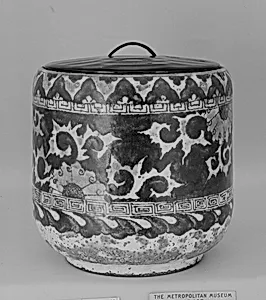
Water Pot
Unknown Artist
19th century
Medium
Clay covered with a white slip and a blue design under the glaze (Kiyomizu ware)
Dimensions
H. 6 1/8 in. (15.6 cm)
Classification
Ceramics
Culture & Period
Japan · Edo (1615–1868) or Meiji period (1868–1912)
Department
Asian Art
Museum
Metropolitan Museum of Art, New York, NY
Credit
Gift of Mr. and Mrs. Samuel Colman, 1893
Accession Number
93.1.111a, b
Rights
Public Domain
Art Historical Context
This elegant Water Pot, crafted in the 19th, exemplifies the refined artistry of Kiyomizu ware from Kyoto, Japan. Standing just 6 1/8 inches tall, it is made of clay coated with a smooth white slip, adorned with intricate blue designs painted beneath a clear glaze. This underglaze technique—firing the blue cobalt decoration before applying the transparent glaze—ensures the patterns endure, creating a subtle luminosity that highlights the potter's precision. Produced during the late Edo period (1615–1868) or early Meiji (1868–1912), Kiyomizu ware emerged from Kyoto's Kiyomizu district, renowned for its innovative ceramics inspired by both local traditions and imported Chinese styles. The blue-and-white palette nods to centuries-old porcelain influences, while the functional form of the water pot suggests its role in tea ceremonies, floral arrangements, or household rituals, blending utility with aesthetic grace. A generous gift to the Metropolitan Museum of Art from Mr. and Mrs. Samuel Colman in 1893, this piece offers a window into Japan's ceramic mastery during a time of cultural transition. Visitors will appreciate its timeless poise, a testament to anonymous artisans whose work elevated everyday objects into enduring treasures.