
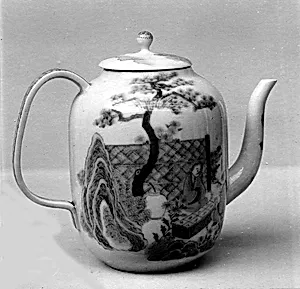
Water Pot with Chinese Figures in a Landscape Design
Unknown Artist
late 18th century
Medium
Porcelain with underglaze blue decoration (Hirado ware)
Dimensions
H. 5 1/2 in. (14 cm); L. 6 5/8 in. (16.8 cm)
Classification
Ceramics
Culture & Period
Japan · Edo period (1615–1868)
Department
Asian Art
Museum
Metropolitan Museum of Art, New York, NY
Credit
Gift of Mrs. V. Everit Macy, 1923
Accession Number
23.225.86a, b
Rights
Public Domain
Tags
Art Historical Context
This exquisite water pot, crafted in late 18th-century Japan during Edo period (16151868), showcases the refined artistry of Hirado ware porcelain. Measuring a modest 5½ inches high, its pristine white body is adorned with underglaze decoration depicting Chinese figures strolling through a lush landscape of stylized trees. The deep cobalt pigment, applied beneath the glaze before firing, creates enduring, vibrant motifs that mimic the elegance of Chinese blue-and-white porcelain, a hallmark of Hirado kilns on Hirado Island. Hirado ware flourished in this era of peace and prosperity, when Japanese potters mastered imported Chinese techniques to produce luxury ceramics for tea ceremonies, scholarly pursuits, and ink painting. Small vessels like this were essential tools for artists and calligraphers, used to freshen brushes with clean water. The fusion of Chinese-inspired figures—elegant men amid nature—with Japan's precise craftsmanship highlights cultural exchange along East Asia's trade routes, blending exoticism with domestic innovation. Today, housed in the Metropolitan Museum of Art's Asian Art Department as a 1923 gift from Mrs. V. Everit Macy, this pot invites visitors to appreciate the subtle beauty of everyday Edo elegance, where porcelain became a canvas for poetic landscapes.