
Coffeepot
Unknown Artist
ca. 1750
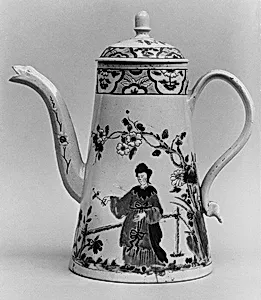
Medium
Salt-glazed stoneware
Dimensions
Height: 7 1/2 in. (19.1 cm)
Classification
Ceramics-Pottery
Culture
British, Staffordshire
Department
European Sculpture and Decorative Arts
Museum
Metropolitan Museum of Art, New York, NY
Credit
Gift of Mrs. Russell S. Carter, 1945
Accession Number
45.12.62a, b
Rights
Public Domain
Tags
Art Historical Context
This elegant coffeepot, crafted 1750 in Staffordshire, England, exemplifies the height of British ceramic production during the 18th century. Made from salt-glazed stone—a durable, practical medium achieved by vaporizing salt in the kiln to create a, glass-like surface—this piece stands at 7½ inches tall. Staffordshire potteries, centered in the Midlands, revolutionized everyday tableware, making high-quality ceramics affordable for the growing middle class amid the Industrial Revolution's early stirrings. The unknown artisan's design likely features delicate motifs of women and flowers, common in salt-glaze decoration that mimicked pricier silver or porcelain. These whimsical reliefs added a touch of artistry to functional objects, reflecting the era's fascination with floral symbolism and feminine grace. As coffeehouses flourished in Britain, becoming hubs for social and intellectual exchange, such coffeepots graced many homes, blending utility with subtle elegance. Today, this gift to the Metropolitan Museum of Art from Mrs. Russell S. Carter in 1945 offers a glimpse into Georgian domestic life, highlighting Staffordshire's pivotal role in shaping global ceramics traditions.