
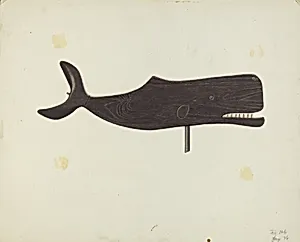
Whale Weather Vane
c. 1939
Medium
watercolor and graphite on paperboard
Dimensions
overall: 32.5 x 40.2 cm (12 13/16 x 15 13/16 in.) Original IAD Object: 30" long
Classification
Index of American Design
Department
CG-W
Museum
National Gallery of Art, Washington, D.C.
Credit
Index of American Design
Accession Number
1943.8.16258
Rights
Public Domain
Art Historical Context
Behold the *Whale Weather Vane a captivating watercolor and graphite rendering by artist Albert Ryder, created around 1939 as part of the Index of American Design (IAD). This New Deal-era project, sponsored by the Works Progress Administration, commissioned artists to meticulously document America's folk art heritage through precise, colorful depictions of everyday objects. Ryder's 32.5 x 40.2 cm work captures a 30-inch-long original weather vane, preserving its whimsical form for posterity amid the Great Depression. Weather vanes like this whale—likely carved from wood and gilded for visibility—adorned barns, ships, and rooftops across early America, serving both practical and symbolic roles. The dynamic whale motif evokes the nation's seafaring past, particularly New England's whaling industry, where such fanciful sculptures blended utility with maritime folklore. Ryder's technique masterfully renders the creature's sinuous body, arrow-pierced form, and directional arrows in vibrant watercolor washes and fine graphite lines, highlighting the craftsmanship of anonymous folk artisans. Housed in the National Gallery of Art, this IAD piece underscores the cultural richness of American vernacular design, celebrating ingenuity and regional pride. It's a delightful window into a bygone era, reminding us how everyday objects carried stories of adventure and resilience.
About the Artist
Albert Ryder · 1911–2001
Albert Ryder is an artist for whom biographical documentation is limited. No birth or death dates have been confirmed in major reference sources, and his nationality and training are not established in available records. His name is likely distinct from that of Albert Pinkham Ryder (1847–1917), the celebrated American symbolist painter, and should not be conflated with that better-documented figu...