
Wheellock Rifle
1660
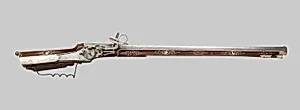
Medium
Steel, iron, walnut, horn, and mother-of-pearl
Dimensions
L. 112 cm (44 1/8 in.) Barrel L. 84.8 cm (33 3/8 in.) Caliber .67 Wt. 10 lb.
Classification
firearm-long gun
Department
Applied Arts of Europe
Museum
Art Institute of Chicago
Accession Number
116552
Rights
Public Domain
Art Historical Context
This ornate Wheellock Rifle from 1660, created by an unknown European maker, represents the height of 17th-century firearms as both functional weapons and luxury objects. Measuring 112 cm overall with an 84.8 cm barrel of .67 caliber and weighing 10 pounds, it was likely a hunting or presentation piece for a wealthy owner rather than a standard military arm. The wheellock mechanism—using a spring-driven spinning wheel to strike sparks from pyrite—offered greater reliability than earlier matchlocks and was prized by nobility despite its complexity and cost. Crafted from steel and iron for the lock, barrel, and fittings, the rifle features a walnut stock lavishly inlaid with horn and iridescent mother-of-pearl. These decorative techniques transformed a practical long gun into a work of applied art, reflecting Baroque-era tastes where weapons doubled as status symbols. Rifling in the barrel improved accuracy over smoothbore muskets, making it especially suitable for sport hunting among the European elite. Now in the Art Institute of Chicago’s Applied Arts of Europe collection, the piece highlights the skilled metalworking and inlay traditions of the period. Though the artisan remains anonymous, its survival illustrates how firearms of this quality were treasured heirlooms, blending engineering innovation with exquisite craftsmanship that continues to captivate museum visitors today.
About the Artist
Unknown
The artist designated as "Unknown" in our virtual museum's collection exemplifies a poignant chapter in art history: creators whose identities have faded into obscurity despite the enduring power of their work. With only one known artwork attributed to them in our holdings, this figure represents countless anonymous hands that shaped visual culture across centuries. Museums worldwide, including th...