
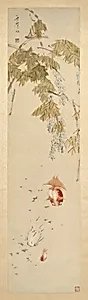
Wisteria and Goldfish 紫藤金魚圖
Qing dynasty (1644–1911), late 19th century
Medium
Hanging scroll; ink and colors on paper
Classification
hanging scroll
Department
Arts of Asia
Museum
Art Institute of Chicago
Accession Number
46432
Rights
Public Domain
Art Historical Context
**Wisteria and Gold (紫藤金魚圖 by Xugu (1823–1896) is a captivating hanging scroll from China's Qing dynasty, created in the late 19 century. This ink and color work on paper exemplifies the elegant tradition of literati painting, where artists like Xugu—also known as Zhang Xiong—blended poetic observation with personal expression. Displayed in the Art Institute Chicago's Arts of Asia, it invites viewers into a serene world of cascading wisteria blooms and vibrant goldfish, symbols of graceful abundance and lively vitality in Chinese culture. Hanging scrolls like this were prized possessions, unrolled for contemplation during scholarly gatherings or seasonal celebrations, fostering a meditative appreciation of nature's harmony. Xugu, active in Shanghai's vibrant art scene amid the dynasty's waning years, drew from classical flower-and-bird motifs while infusing a modern realism influenced by photography and Western techniques. His masterful use of layered washes and delicate lines brings the wisteria's pendulous clusters and goldfish's fluid movements to life, evoking the impermanence of beauty in a time of social upheaval. This artwork highlights the Qing era's artistic resilience, bridging imperial traditions with emerging modernity, and remains a testament to Xugu's innovative spirit. (198 words)
About the Artist
Xugu · 1824–1896
Xugu (1824–1896) was one of the most celebrated Chinese painters of the late Qing dynasty, renowned for his lyrical, highly individualistic approach to flower and plant painting that set him apart from both the orthodox academic tradition and the more popular Shanghai commercial style. Born Zhu Huairen in Anhui province, he took monastic vows and became a Buddhist monk, adopting the religious name...