
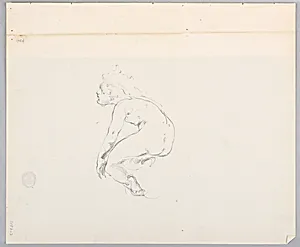
Woman
Classification
figures
Department
Smithsonian Collection
Museum
Smithsonian American Art Museum
Credit
Gift of Henrietta Haller
Accession Number
1904-16-494
Rights
Public Domain
About this artwork
Research in Progress
Art Historical Context
Robert Frederick Blum (1857–1903), a American artist of the late 19th century, captures the essence of a solitary woman in his work *Woman*, created between 1881 and1883. Blum, celebrated for his genre scenes and intimate portraits, drew inspiration from his travels in Europe, particularly Venice, he immersed himself in the city's vibrant life during this period. As a member of the influential Tile Club alongside artists like William Merritt Chase Blum bridged American realism with international influences, including subtle nods to Japanese aesthetics in his compositions. Classified as a figure study and housed in the Smithsonian American Art Museum's collection—thanks to the generous gift of Henrietta Haller—this piece reflects the era's fascination with individual character and everyday dignity. Though the medium remains under research, Blum's oeuvre often featured delicate pastels, oils, and watercolors that emphasized soft lighting and expressive poses, evoking quiet introspection. Produced amid the American Renaissance, when U.S. artists sought sophistication abroad, *Woman* exemplifies Blum's skill in portraying human emotion with graceful realism. Visitors to the Smithsonian will appreciate how this understated portrait invites contemplation, highlighting Blum's role in elevating American figure painting to a more nuanced, cosmopolitan level. Ongoing research promises to reveal even more about its creation and context.