
Yorktown
Medium
Drawing
Classification
Drawing
Department
Smithsonian Collection
Museum
Smithsonian American Art Museum
Credit
Smithsonian American Art Museum, Gift of Dr. Fortunato Porotto
Accession Number
1963.6.36
Rights
Public Domain
Tags
Art Historical Context
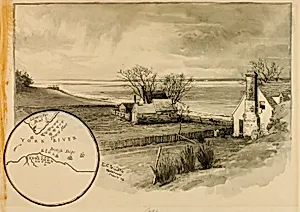
Ernest C. Peixotto’s 1898 drawing *Yorktown* offers a thoughtful glimpse into one of America’s most pivotal historic sites. Created as a drawing on paper, the work depicts a house overlooking the York River, combining architectural detail with a map-like element that situates the scene within its broader landscape. Peixotto, known for his illustrative approach, uses line and subtle shading to evoke both the quiet character of the riverside setting and its layered past. Yorktown holds enduring significance as the location of the 1781 British surrender that effectively ended the American Revolution. By 1898, when Peixotto made this drawing, the town had become a quiet place of remembrance, its Revolutionary-era buildings and riverfront serving as reminders of national origins. The inclusion of a map within the composition suggests an interest in connecting personal observation with historical geography, inviting viewers to consider how place and memory intersect. Now part of the Smithsonian American Art Museum’s collection through a generous gift, *Yorktown* preserves a late-nineteenth-century artist’s response to an American landmark. Its modest scale and precise draftsmanship highlight the drawing’s role as both a visual record and a quiet meditation on history.