
Zeedieren
1775 - 1824
Medium
color woodcut
Dimensions
0; 0
Rights
Public Domain
About this artwork
kleurenhoutsnede
Art Historical Context
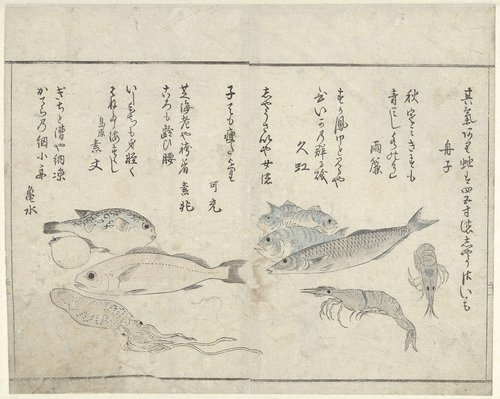
"Zeedieren" (Sea Animals), a vibrant color woodcut by Japanese artist Kitao Masay (1764–1824), captures the fascinating world of marine life with meticulous detail and lively hues. Created during Masayoshi's active career roughly 1775 to 1824, this print exemplifies the ukiyo-e tradition—"pictures of the floating worlda popular genre in Edo-period Japan (1603–8) that celebrated everyday beauty, nature, and novelty. As a skilled pupil of ukiyo-e master Kitao Shigemasa, Masayoshi specialized in illustrations of plants, animals, and natural phenomena, often blending artistic flair with scientific observation. The color woodcut technique, known as *nishiki-e* or "brocade pictures," involved carving separate wooden blocks for each color and layer, then precisely registering them to create rich, multi-tonal images. This labor-intensive process allowed for affordable yet stunning mass production, making art accessible beyond the elite. "Zeedieren" reflects Japan's deep cultural fascination with the ocean's mysteries, evoking wonder at exotic sea creatures amid the era's growing interest in natural history encyclopedias. A delightful window into 18th-19th century Japanese aesthetics, it invites visitors to appreciate the harmonious blend of artistry and curiosity in ukiyo-e mastery.
About the Artist
Kitao Masayoshi · 1761–1824
Kitao Masayoshi (1761–1824), who later took the name Kuwagata Keisai, was a pivotal figure in Japanese art whose influence extended from ukiyo-e printmaking to the development of instructional art manuals that would shape Japanese visual culture for generations. Born in Edo (present-day Tokyo) in 1761 and dying there in 1824, Masayoshi's career spanned a transformative period in Japanese art when ...