Ctrl K
1699–1779
Jean-Baptiste-Siméon Chardin, born on November 2, 1699, in Paris to a cabinetmaker father who crafted billiard tables, grew up immersed in the city's artisan world on the Left Bank near Saint-Sulpice. His early training came through apprenticeships with the history painters Pierre-Jacques Cazes, where he honed academic drawing techniques, and Noël-Nicolas Coypel, whose assignment to copy a musket from life sparked Chardin's lifelong commitment to meticulous observation. He became a master in the Académie de Saint-Luc in 1724 before gaining admission to the prestigious Académie Royale de Peinture et de Sculpture in 1728, submitting his breakthrough still lifes *The Ray* (1728) and *The Buffet*. Chardin's personal life was marked by tragedy: his first wife, Marguerite Saintard, and their young children—a son, Jean-Pierre, who became a painter, and daughter Marguerite-Agnès—died in the 1730s; a second marriage in 1744 produced another infant daughter who perished soon after.
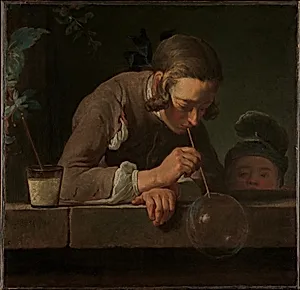
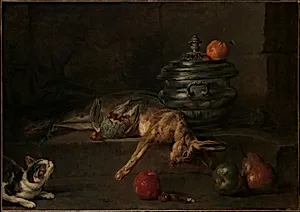
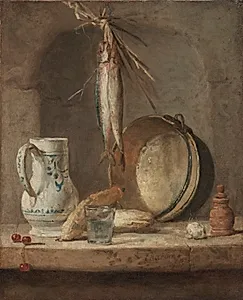
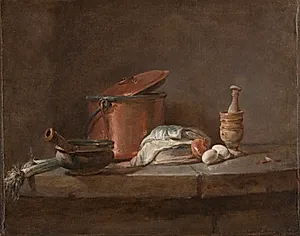
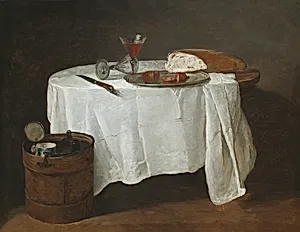
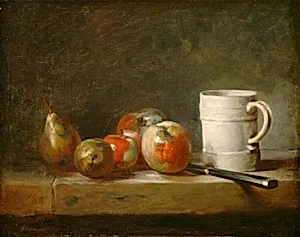
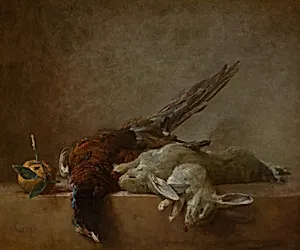
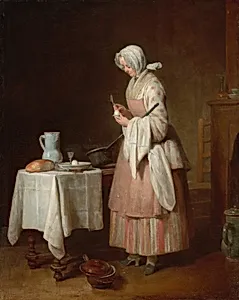
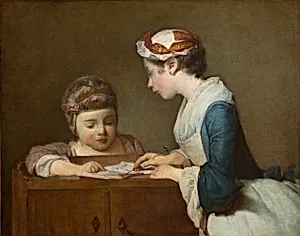
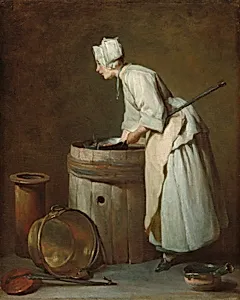
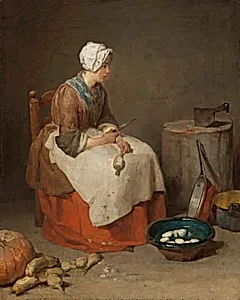
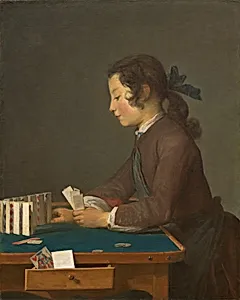
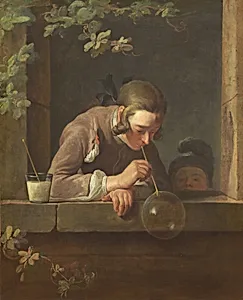
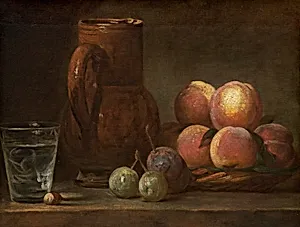
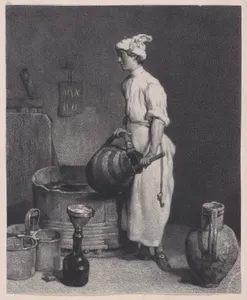
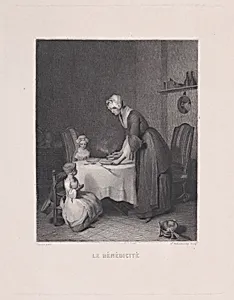
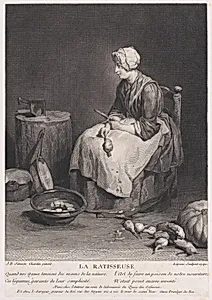
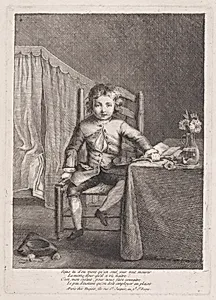
Chardin's artistry elevated humble domestic scenes and still lifes, drawing from the realist tradition of 17th-century Dutch and Flemish masters like those of the Low Countries, whose influence permeates his granular impasto, diffused light, and textured compositions. Rejecting the frivolity of Rococo, he captured the quiet dignity of kitchen maids, children at play, and everyday objects—kitchen utensils, fruits, game—with profound sensitivity, often infusing vanitas themes of fragility, as in soap bubbles or precariously stacked cards. Major works include the visceral *The Ray* (1728), depicting a gutted fish amid hunting gear; genre masterpieces like *Soap Bubbles* (c. 1733–1734), *The House of Cards* (c. 1737), *Saying Grace* (1744), and *The Kitchen Maid* (1738); and late still lifes such as *Basket of Wild Strawberries* (c. 1760) and *Still Life with Attributes of the Arts* (1766).
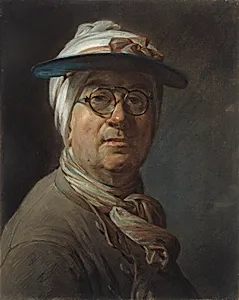
Rising through the Académie ranks—treasurer, counselor, and eventually *Premier peintre du roi* in 1770 with a royal pension—Chardin exhibited annually at the Salon from 1737, earning praise from Denis Diderot for painting "with feeling." Failing eyesight from lead paints forced a shift to luminous pastels in the 1770s. His legacy endures as a bridge to modernity: Édouard Manet, Paul Cézanne, Henri Matisse (who copied his works), and others revered his elevation of the ordinary to poetic heights, rediscovering him in the 19th century as a timeless master of intimate realism. Today, around 200 paintings grace museums worldwide, including 20 in this collection, testifying to his enduring appeal.