Ctrl K
1475–1564
Michelangelo di Lodovico Buonarroti Simoni (1475–1564) stands as the quintessential figure of the Italian High Renaissance, a sculptor, painter, architect, and poet whose mastery across disciplines embodied the era's humanist ideals. Born on March 6, 1475, in Caprese within the Republic of Florence to a modest family—his father, Lodovico di Buonarroti Simoni, served as a minor magistrate—Michelangelo grew up in turbulent times marked by political upheaval and artistic ferment. By his early twenties, he had already achieved international renown, working primarily in Florence before relocating to Rome in his thirties at the behest of popes and patrons. His profound engagement with classical antiquity fueled a style defined by monumental scale, anatomical precision, and emotional intensity, setting him apart even among rivals like Leonardo da Vinci.
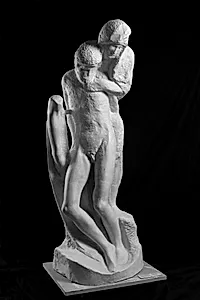
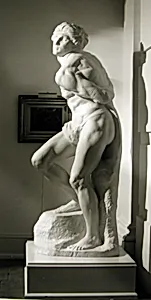
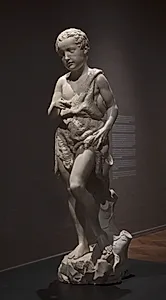
Michelangelo's formative years in Florence immersed him in the vibrant artistic milieu of the Medici court and workshops, where he developed his unparalleled sculptural prowess. He worked in the High Renaissance tradition, emphasizing idealized human forms, dynamic contrapposto, and dramatic narrative. Iconic early masterpieces include the *Pietà* (1498–1499), a heart-wrenching marble sculpture of the Virgin Mary cradling Christ's body, commissioned for St. Peter's Basilica, and the colossal *David* (1501–1504), a 17-foot symbol of Florentine republican virtue originally placed in the Piazza della Signoria. These works showcased his ability to imbue marble with lifelike tension and pathos, drawing from Greco-Roman models while infusing them with Christian fervor.
Later commissions cemented his legacy. From 1508 to 1512, under Pope Julius II, he painted the Sistine Chapel ceiling—a staggering fresco cycle of over 300 figures depicting scenes from Genesis, including the iconic *Creation of Adam*. He returned decades later for *The Last Judgment* (1536–1541) on the altar wall, a turbulent vision of apocalypse blending awe and terror. As an architect, he redesigned St. Peter's Basilica from 1546, contributing its massive dome. Michelangelo's influence endures in Western art: his fusion of sculpture, painting, and architecture inspired Mannerism, Baroque masters like Bernini, and beyond, affirming his status as the era's most documented and celebrated genius. With 34 known artworks in our virtual museum collection, his oeuvre continues to captivate, revealing the divine spark in human creation.
(Word count: 378)