Ctrl K
1860–1920
Anders Zorn (1860–1920), one of Sweden's most celebrated artists, was born on February 18 in Utmeland near Mora in Dalarna, and raised on his maternal grandparents' farm in the nearby hamlet of Yvraden. Displaying prodigious talent from a young age, he attended school in Mora Strand until age twelve, followed by secondary grammar school in Enköping, where he excelled in drawing people and horses. In 1875, at fifteen, Zorn moved to Stockholm, first studying at the School for Handicraft before entering the preparatory school of the Royal Swedish Academy of Arts; he amazed his teachers there and graduated from the Academy in 1880, supported by an inheritance from his father's estate.
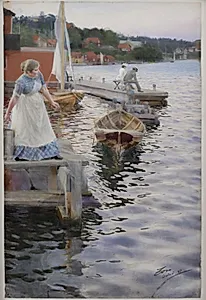
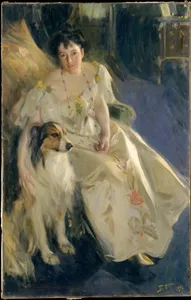
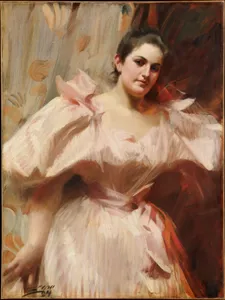
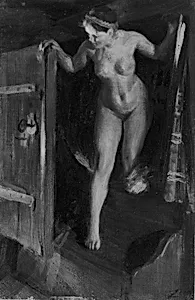
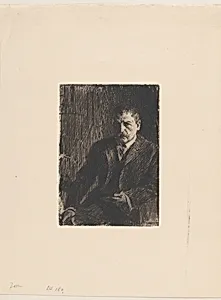
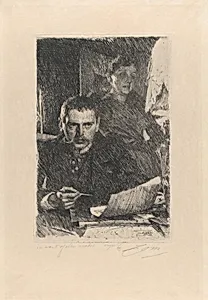
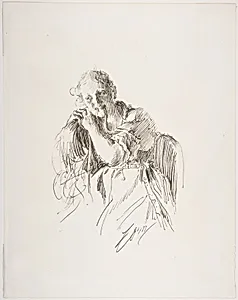
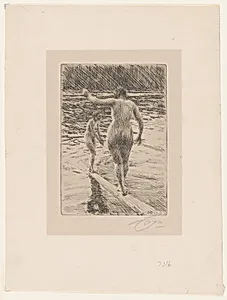
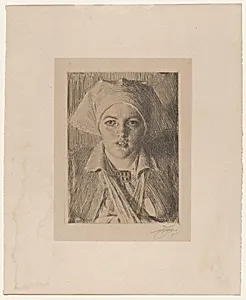
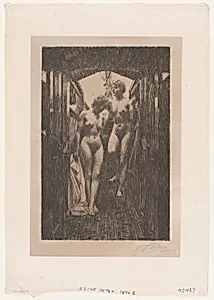
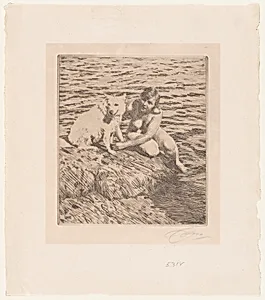
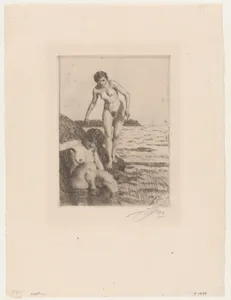
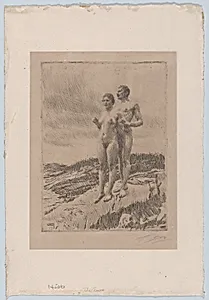
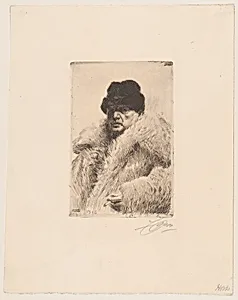
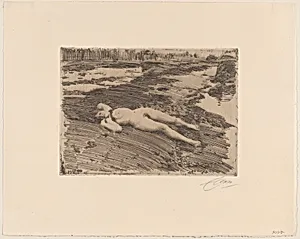
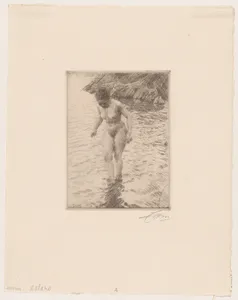
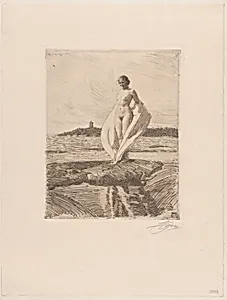
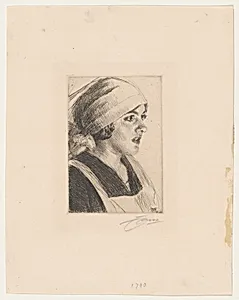
Zorn quickly gained international acclaim through extensive travels to London, Paris, Italy, Spain, the Balkans, and the United States, where he painted portraits of luminaries like Presidents Grover Cleveland and William Howard Taft. He worked masterfully in watercolor early on—earning renown at the 1889 Paris World's Fair, where he was named Chevalier de la Légion d'honneur—before shifting primarily to oils around 1887. His vigorous, impressionistic style captured the play of light on water, skin, and fabric, often featuring nudes of full-figured Dalarna women (coining the term "Zornkulla") and lively genre scenes of rural life. Renowned for his limited "Zorn palette" of lead white, yellow ochre, vermilion, and ivory black, he also excelled as a sculptor and etcher, producing swift, elegant depictions of nobility, peasants, and family. In 1885, he married Emma Lamm, a wealthy patron from a Jewish merchant family, with whom he had no children but built the idyllic Zorngården home near Mora.
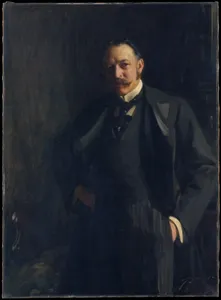
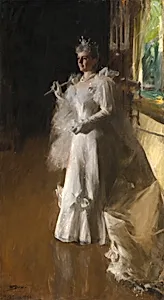
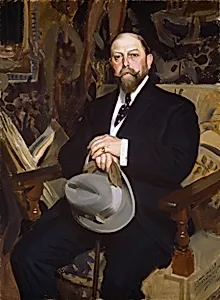
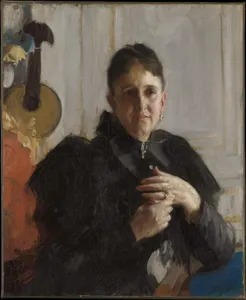
Among his masterpieces are *Sommarnöje* (1886), a luminous watercolor of bathers that became Sweden's most expensive painting when sold for 26 million SEK; the portrait *Mrs. Potter Palmer* (1893); *Midsummer Dance* (1897), evoking festive rural revelry; and intimate nudes like *Girls from Dalarna Having a Bath* (1906) and *Freya* (1901). He portrayed King Oscar II (1898), Queen Sophia (1909), and American elites such as financier Henry Clay Pierce (1899).
Zorn's legacy endures through the Zorn Collections in Mora—Zorngården, Zornmuseet, Gammelgården, and Gopsmor—which house his vast oeuvre alongside his art collection, donated to the Swedish state. A philanthropist in his later years, he endowed the Bellman Prize for Swedish poets just before his death on August 22, 1920. His bravura technique and evocative portraits continue to inspire, with works in major institutions worldwide.